
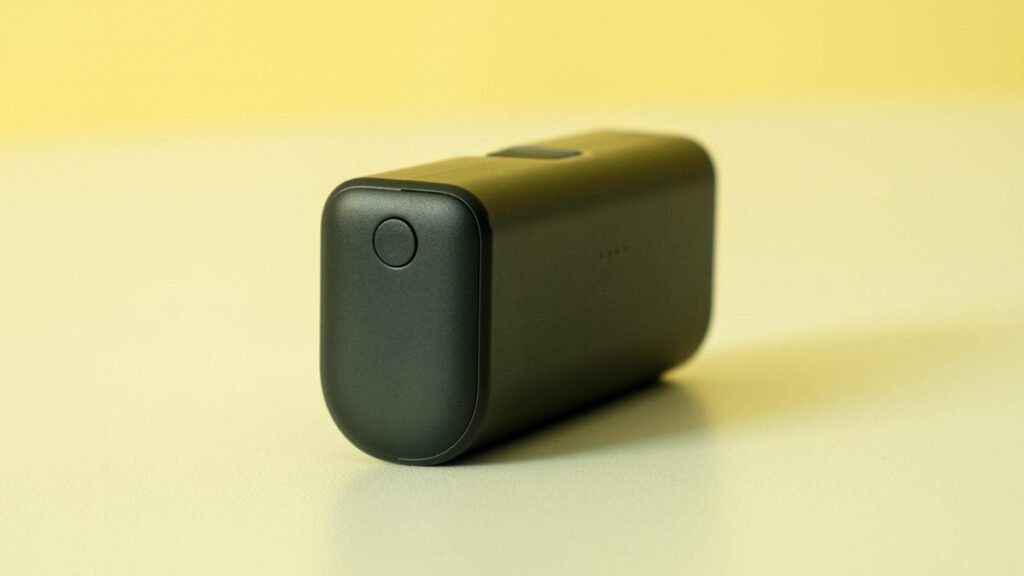
A power bank isn’t the most exciting gadget you can buy, but you notice its absence fast — your phone hits 5% at exactly the wrong moment and suddenly nothing matters except finding an outlet. The best compact power bank in 2026 isn’t the biggest one or the cheapest one. It’s the one that fits your life: small enough to carry every day, with enough capacity and charging speed to actually be useful when you need it.
This guide covers four picks for different needs: the Anker Nano 10K 45W for the best everyday balance, an ultra-thin magnetic option for pocket carry, a 130W workhorse for laptops, and a design-forward pick for transparent-tech fans. We’ll also help you figure out how much capacity you really need — because most people buy the wrong size.
Understanding Power Bank Specs (Without the Headache)
Three numbers matter: capacity (mAh), output power (watts), and charging standard. Capacity tells you how much energy the bank holds — 5,000mAh is roughly one full phone charge, 10,000mAh is two to three, and 20,000mAh+ is for tablets, laptops, or multi-day trips. But you never get the full rated capacity into your phone: conversion losses and heat eat roughly 30%, so a 10,000mAh bank delivers about 6,500–7,000mAh of actual charge.
Output power decides how fast the bank charges. A phone fast-charges at 20–45W depending on the model; a laptop needs 45–100W+. If the bank’s output is lower than what your device accepts, charging slows to a crawl. Match the wattage to your hungriest device.
Third is the standard: USB-C Power Delivery (PD) is the universal fast-charging protocol everything now uses, and Qi2 is the magnetic wireless standard behind 15W snap-on charging for iPhones (and increasingly Android phones). Qi2 matters because it means full-speed magnetic charging from third-party accessories, not the 7.5W trickle of old “MagSafe-compatible” gear. If you’re buying a magnetic bank in 2026, make sure it says Qi2 — not just “magnetic.”
How to Choose the Right Power Bank
1. Match capacity to your routine, not your anxiety
Daily commuters and city dwellers do best with 5,000–10,000mAh: enough for one or two full phone charges, small enough to carry without noticing. Travelers who spend full days away from outlets should look at 20,000mAh. Laptop charging needs 20,000mAh+ and high wattage. Bigger isn’t better — it’s just heavier. A bank you leave at home because it’s bulky protects nothing.
2. Check the wattage against your devices
List your devices and their fast-charging speeds: iPhone (20–27W wired), most Android flagships (25–45W), iPad (20–30W), MacBook Air (35–70W), MacBook Pro (70–140W). Your bank’s USB-C output should at least match your most demanding device. Multi-port banks split their total output when several devices are connected, so check both per-port and total wattage.
3. Decide: cable, magnetic, or both
Built-in cables are the unsung hero feature of modern power banks — you’ll never forget your cable if it lives inside the bank. Magnetic (Qi2) banks snap onto the back of your phone for cable-free top-ups, which is wonderful for commuting and photography days. The ideal everyday bank increasingly offers both: a built-in USB-C cable for fast wired charging and magnetic wireless for convenience.
4. Consider recharge speed and the display
A bank that takes six hours to refill is a bank you’ll forget to charge. Look for fast input charging (30W+ input refills a 10K bank in under two hours). A percentage display beats blinking dots — knowing you have exactly 62% left is genuinely useful information when you’re deciding whether to ration.
The Best Compact Power Banks of 2026
Best Balance: Anker Nano Power Bank 10K 45W
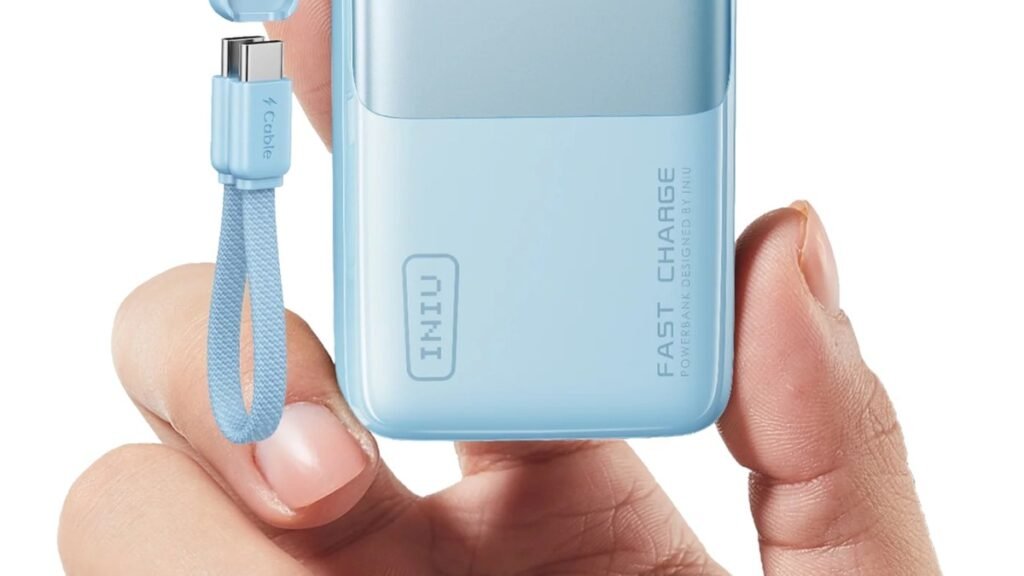
The Anker Nano Power Bank 10K 45W hits the sweet spot for most people. It packs 10,000mAh of capacity with up to 45W output — enough for multiple phone top-ups and even respectable laptop charging in a pinch — plus a built-in USB-C cable that tucks away when you don’t need it. No more digging for a cable; the bank is a complete charging kit on its own.
There’s also a display showing the remaining charge, so you always know exactly where you stand. The capacity covers roughly two full phone charges after conversion losses, and 45W output means modern phones charge at full speed. Sustained high-speed output can taper as the bank heats up, and fully recharging the bank itself takes around two hours — both normal for this class.
For context on how far the tech has come, pair it with one of the best GaN chargers of 2026 at home and you’ve got fast charging covered everywhere: wall power when you’re near an outlet, the Nano when you’re not.
Pros:
- Excellent balance of capacity, speed, and size for everyday carry
- Built-in USB-C cable — no separate cable to forget
- 45W output handles phones at full speed and helps with tablets
- Clear display shows exact remaining charge
Cons:
- Sustained 45W output can throttle under heat
- Full recharge takes around two hours
Best for: Most people — commuters, travelers, and anyone who wants one bank that handles phones, tablets, and the occasional laptop without bulk.
Thinnest Magnetic Option: BMX SolidSafe Air 5K
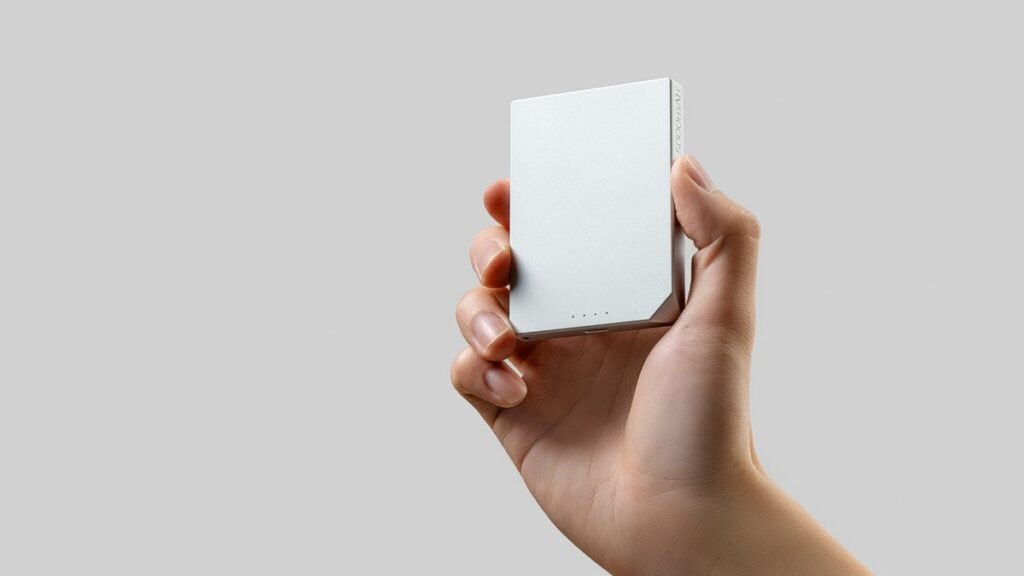
If your priority is carrying a power bank without noticing it, the BMX SolidSafe Air 5K takes a different approach: extreme thinness. At around 6.8mm thick, it’s designed to stay unobtrusive while attached to a compatible phone, snapping on magnetically via Qi2 wireless charging at up to 15W — full-speed magnetic charging, not the slow trickle of older magnetic banks.
It offers 5,000mAh of capacity — roughly one full phone charge — plus USB-C output up to 20W for wired top-ups. That’s the trade-off: you give up capacity and speed for a bank so thin it lives on your phone like a second skin. It won’t replace a 20,000mAh brick, and it’s not meant to.
Pros:
- Remarkably thin — disappears behind your phone
- Full-speed 15W Qi2 magnetic charging
- USB-C port for 20W wired charging when you need speed
- Ideal form factor for commuting and photography days
Cons:
- 5,000mAh is only about one full charge
- 20W wired output is modest compared to larger banks
Best for: Minimalists and iPhone users who want invisible everyday backup power that snaps on magnetically.
Maximum Capacity: UGREEN Nexode 20,000mAh 130W
Charging more than a phone? The UGREEN Nexode 20,000mAh 130W is built for laptops and demanding devices. With two USB-C ports and one USB-A port, a 130W total output, and a TFT display showing voltage, current, and power in real time, it’s essentially a portable charging station. It can genuinely replace a laptop charger on travel days.
The trade-off is portability: at over a pound, this is a bag accessory, not a pocket item. But if your workday involves a laptop, a tablet, and a phone, one Nexode replaces three chargers and the cable hunt that comes with them. The live power readout is genuinely useful for diagnosing which device is drawing what — and for nerding out, which is half the fun.
Pros:
- 130W total output — fast-charges laptops, not just phones
- Three ports for multi-device charging
- Informative TFT display with live voltage/current/power
- 20,000mAh handles long travel days easily
Cons:
- Heavy — over a pound, strictly a bag item
- Overkill if you only charge a phone
Best for: Travelers and remote workers who need to charge a laptop, tablet, and phone from one brick.
Best-Looking Option: Sharge Shargeek 170
The Sharge Shargeek 170 is for people who think power banks should look as interesting as the tech inside. Its transparent design reveals the internal components, and the prism-like shape is unlike any traditional power bank. This is a gadget you display on your desk, not one you hide in a drawer.
With 24,000mAh and up to 140W output it’s genuinely laptop-grade — but at around $120 it’s expensive next to conventional banks with similar specs. You’re paying a premium for the design. If you like transparent tech and don’t mind the price, it’s distinctive in a way nothing else here is.
Pros:
- Striking transparent design — a conversation piece
- Serious specs: 24,000mAh and 140W output
- Built-in display with charging details
- Charges laptops at full speed
Cons:
- Premium pricing for the design
- Bulkier and heavier than conventional banks
Best for: Design enthusiasts who want laptop-grade power in a bank that looks like nothing else.
Power Bank Comparison Table
| Power bank | Capacity | Max output | Standout feature | Best for |
|---|---|---|---|---|
| Anker Nano 10K 45W | 10,000mAh | 45W | Built-in USB-C cable | Everyday carry |
| BMX SolidSafe Air 5K | 5,000mAh | 15W wireless / 20W wired | ~6.8mm thin, Qi2 magnetic | Minimalists |
| UGREEN Nexode 130W | 20,000mAh | 130W | 3 ports, live power display | Laptop charging |
| Sharge Shargeek 170 | 24,000mAh | 140W | Transparent design | Style + power |
As an Amazon Associate I earn from qualifying purchases.
FAQs About Power Banks
How much power bank capacity do I actually need?
For daily carry: 5,000–10,000mAh (one to two phone charges). For travel days: 20,000mAh. For laptops: 20,000mAh+ with at least 65W output — match the wattage to your laptop’s charger. Remember that conversion losses eat roughly 30% of the rated capacity, and anything over 100Wh (about 27,000mAh) needs airline approval, so 20,000mAh is the practical travel ceiling.
What’s the difference between Qi2 and regular magnetic charging?
Qi2 is the certified standard enabling 15W magnetic wireless charging on third-party accessories. Older “MagSafe-compatible” products were often capped at 7.5W — noticeably slower. When buying a magnetic bank, look for the Qi2 logo: it guarantees proper magnet alignment and full 15W speed. The BMX SolidSafe Air 5K’s 15W output is full-speed Qi2, which makes a real difference in top-up times.
Can a power bank charge a laptop?
Yes, if it has enough wattage. Most laptops need 45–65W minimum for meaningful charging (MacBook Pros can want 70–140W). The UGREEN Nexode (130W) and Sharge Shargeek 170 (140W) can genuinely replace a laptop charger. A 45W bank like the Anker Nano will charge a laptop slowly — fine for topping up, not for working through a heavy session.
Why does my power bank charge slowly sometimes?
Common causes: the cable (cheap or damaged cables throttle speeds), heat (banks and phones both slow charging when hot), low bank charge (output tapers as the bank empties), and multi-device charging (output splits across ports). Also check that you’re using the highest-wattage port — on multi-port banks, ports often have different maximums.
Are power banks allowed on airplanes?
Yes, in carry-on luggage — never in checked bags. Banks up to 100Wh (roughly 27,000mAh) are allowed without approval; 100–160Wh needs airline permission. All four picks in this guide are well under the 100Wh limit. Keep them accessible in your bag since security may ask to inspect them.
Final Verdict
For most people, the best compact power bank of 2026 is the Anker Nano 10K 45W: the capacity-to-size ratio is right, the built-in cable removes the biggest daily annoyance, and 45W covers phones and tablets at full speed. Go thinner with the BMX SolidSafe Air 5K if you want invisible magnetic backup, bigger with the UGREEN Nexode if laptops are in the picture, or bolder with the Sharge Shargeek 170 if you want your tech to look as good as it performs.
The real lesson: buy the bank that matches your routine, not your anxiety. A 10,000mAh bank you carry every day beats a 24,000mAh brick you leave at home — every single time.
Affiliate Disclosure: This article contains affiliate links. If you purchase through them, we may earn a commission at no extra cost to you.
Where to Buy: Check Price on Amazon · Compare Prices on Daraz · Check Daraz Deals · Check AliExpress Price · See AliExpress Deals
Check the price on AliExpress — the global marketplace with millions of tech products.
As an AliExpress affiliate, we may earn a commission on qualifying purchases.










Pingback: Best Tech Gifts for Men 2026: 18 Gifts He'll Love
Pingback: Best Gifts for Gamers 2026: Switch 2 & More
Pingback: Best Portable Monitor 2026: Top Picks for MacBook Users
Pingback: Best Bluetooth Tracker 2026: AirTag 2 vs Tile vs Chipolo
Pingback: Nintendo Switch 2 Review: Worth It in 2026?