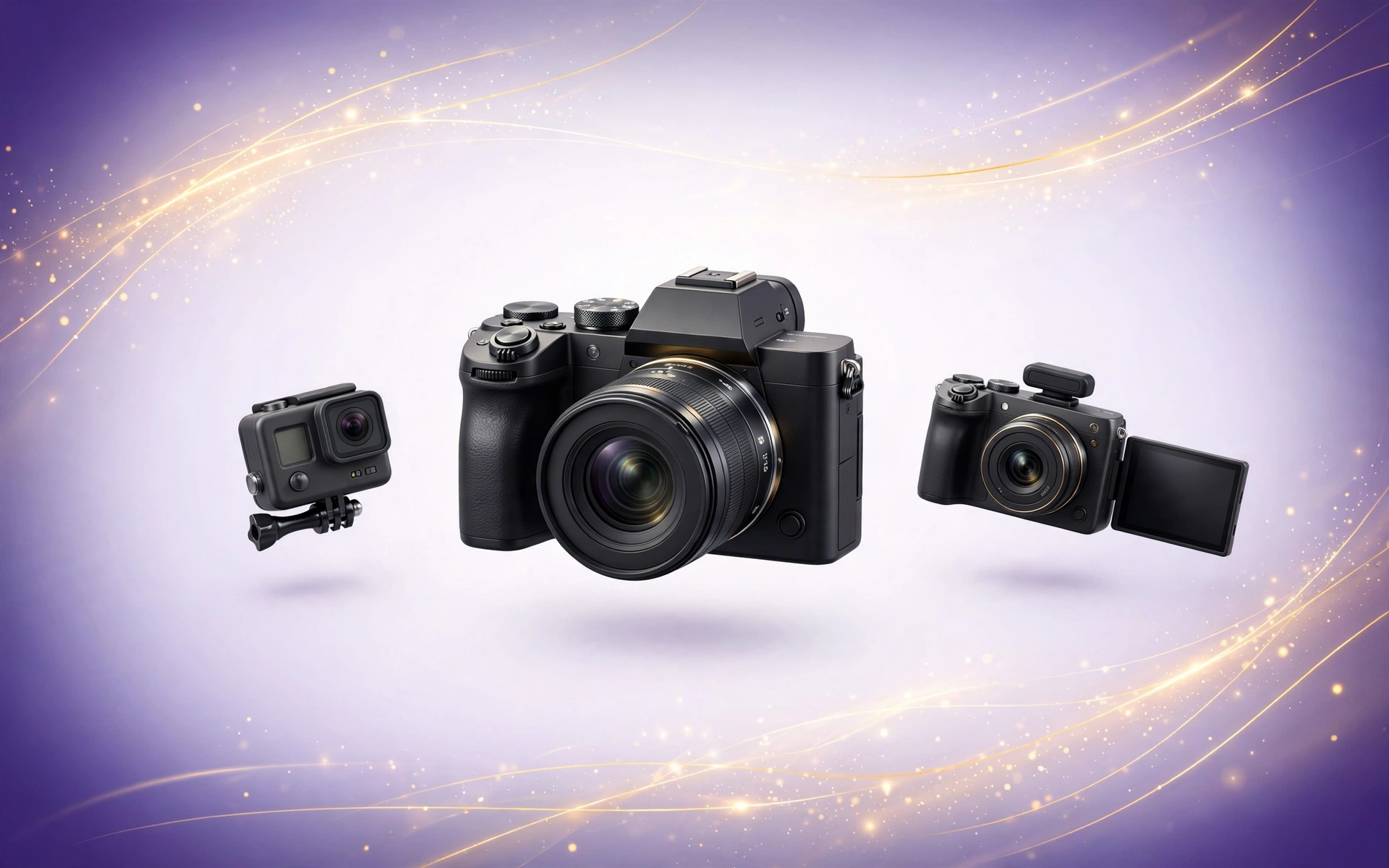
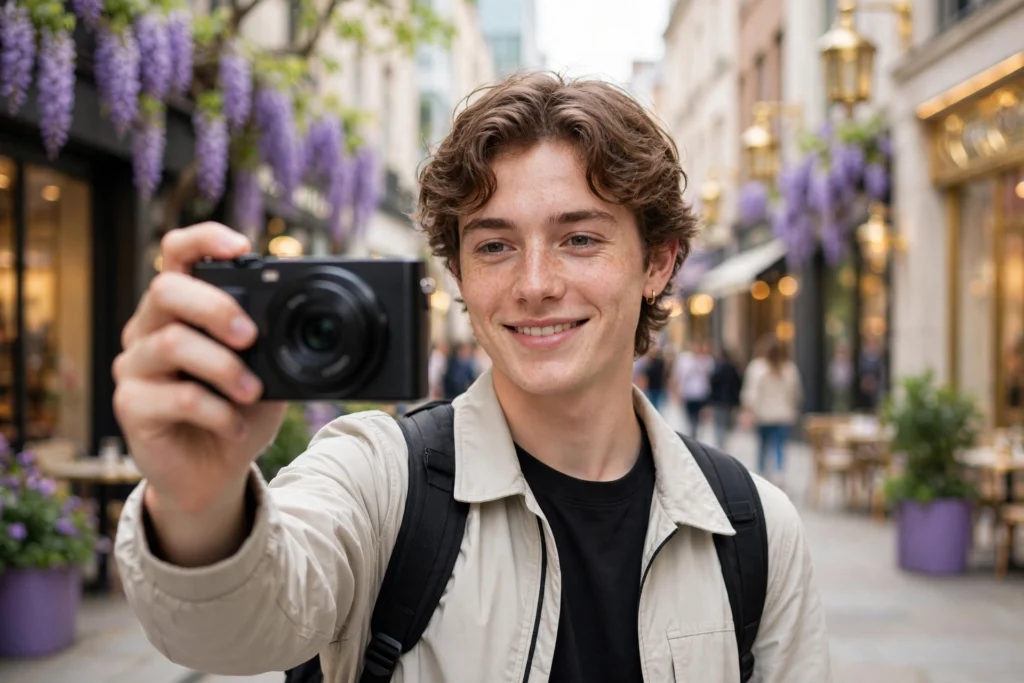
Vlogging has a gear problem: the camera that films beautifully at home is often the same camera you leave at home. Too big, too fiddly, too much setup for a Tuesday. The best vlogging cameras in 2026 solve the real problem — they make great-looking video effortless, so you actually press record.
What matters for vlogging is a short, specific list: reliable autofocus that locks onto your face and stays there, good stabilization for walking shots, a screen you can see while filming yourself, decent audio (or a mic jack), and a size you’ll genuinely carry. These five nail that formula for different kinds of creators.
As an Amazon Associate I earn from qualifying purchases.
The 5 best vlogging cameras in 2026
1. DJI Osmo Pocket 3 — the vlogging cheat code
The Pocket 3 looks like a toy and films like a cinema camera. It’s a tiny 1-inch-sensor camera on a 3-axis mechanical gimbal that fits in a jacket pocket — and the footage it produces is absurdly smooth, sharp, and good-looking for something this small.
Why vloggers obsess over it: the gimbal means walking shots look like you’re on a dolly, the 1-inch sensor handles indoor and evening light far better than any phone or action cam, and it shoots 4K at up to 120fps for creamy slow motion. Face tracking keeps you in frame while you move around. It genuinely replaces a camera-plus-gimbal rig that used to cost three times as much and fill a backpack.
The honest limitations: the fixed wide lens means no zoom to speak of, and the tiny screen is fine for framing but you’ll want the app for serious monitoring. For talking-head, travel, and walk-and-talk vlogging, though, nothing this small comes close.
2. Sony ZV-1 II — the YouTube classic, refined
The original ZV-1 was already the default recommendation for YouTube beginners, and the Mark II fixes its biggest complaint: the lens is now wider (18-50mm equivalent), so you can actually hold it at arm’s length and fit yourself in frame — the most basic vlogging requirement, finally done right.
It’s built around a 1-inch sensor with Sony’s excellent autofocus, which is the real star here. Face and eye tracking is sticky and confident; you can walk toward the camera, turn sideways, hold up products, and it just handles it. The background-defocus button gives you that blurry-background look with one tap, no lens knowledge needed.
Caveats: there’s no viewfinder (you won’t miss it for vlogging), and the battery is small — vloggers learn to carry a USB power bank. If your content is primarily talking to camera for YouTube, this is the most proven tool for the job.
3. Canon PowerShot V10 — the simple one
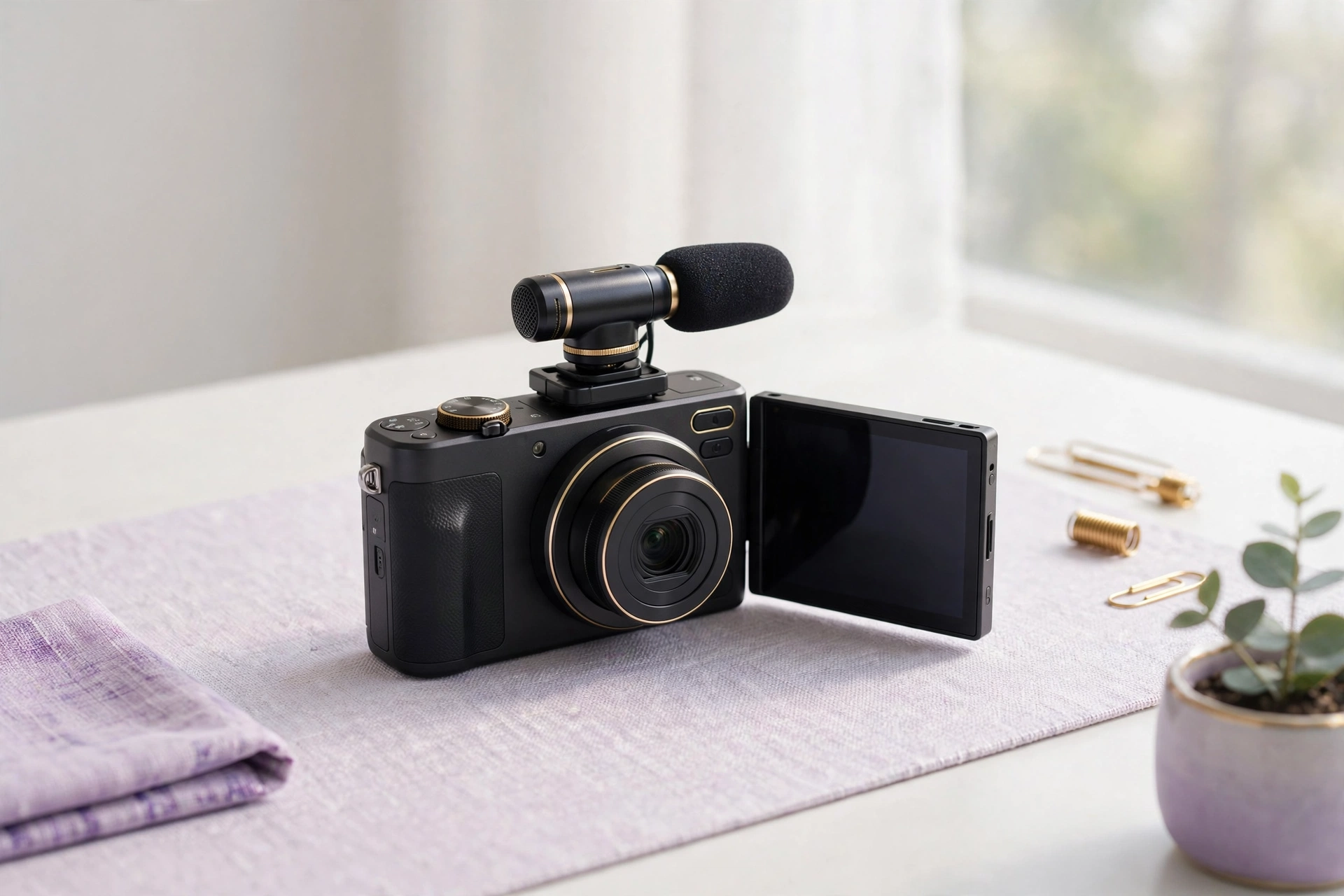
Not everyone wants a “camera camera.” The PowerShot V10 is Canon’s take on the casual creator: a compact, upright, phone-like device you hold like a microphone, with a built-in stand so it sits on any table. It looks unintimidating, which is the point — you’ll actually use it.
Inside is a 1-inch sensor shooting 4K, with Canon’s lovely color science doing the heavy lifting. There’s a wide-angle lens, decent stabilization, and a simplified interface that skips the photography jargon. It’s aimed squarely at TikTok, Reels, and casual YouTube — vertical video friendly, easy to handhold, easy to understand.
Be realistic about the trade-offs: the fixed lens and smaller feature set mean less room to grow than the Sony or DJI, and low light is merely okay. But as a “better than my phone, zero learning curve” upgrade, it hits a sweet spot nothing else quite does.
4. DJI Osmo Action 5 Pro — the rugged vlogger
Want to vlog where the pavement ends? The Action 5 Pro is the adventure vlogger’s pick. It’s a proper waterproof action camera — surf, snow, rain, dust, all fine — but DJI has tuned it into a genuinely capable vlogging tool with a front-facing screen, great stabilization, and subject tracking.
The larger sensor (for an action cam) gives it a real edge in mixed lighting over older action cameras, and battery life is the best in class — important when you’re filming all day away from outlets. The magnetic mounting system makes it trivially easy to stick on a chest mount, helmet, or handlebar and just go.
Compared to the Pocket 3 or ZV-1 II, the image is a step down in pure cinematic quality — smaller sensor, wider lens, less flattering for faces. But if your content involves motion, weather, or anything your other cameras would fear, this is the one that survives the shoot.
5. Insta360 X4 — the creative vlogger’s secret weapon
Here’s a different philosophy: instead of pointing the camera at the thing, capture everything and decide later. The X4 records full 360-degree video in 8K, and you reframe the perfect shot in the app afterward. Never miss a reaction, a landscape, or a moment because you were pointed the wrong way.
For vloggers, the killer features are the invisible selfie stick (which produces impossible-looking drone-style third-person shots) and the ability to punch in, pan, and track subjects in post. One take gives you a wide shot, a close-up, and a tracking shot. It’s an editing multiplier.
The price is workflow: 360 files are huge and reframing takes time. This isn’t the camera for someone who wants to shoot and upload in ten minutes. But for creators who enjoy the edit and want footage nobody else has, it’s the most fun per dollar in vlogging.
How to choose a vlogging camera
Start with where you film. Indoors at a desk? Autofocus and audio matter most — the Sony ZV-1 II is built for this. Out in the world walking around? Stabilization rules — the Pocket 3’s gimbal is unbeatable. In weather and motion? Ruggedness wins — Action 5 Pro.
Autofocus is the spec that matters most. Bad autofocus ruins more vlogs than any other single flaw. All five cameras here have strong face/eye tracking, which is why they’re on this list — it’s the first thing to check on any vlogging camera.
Audio is half the video. Viewers forgive mediocre video; they don’t forgive bad audio. Every pick here benefits enormously from even a basic external mic or wireless mic system. Budget for one — it’s the highest-ROI upgrade in all of vlogging.
Size predicts usage. This is the unglamorous truth: the best vlogging camera is the one you’ll carry on a random Tuesday. Be honest with yourself about what you’ll actually take out of the house. Pocketable beats “better” every time if better stays home.
Think about your platform. Horizontal YouTube content favors traditional cameras (Sony, Canon). Vertical-first TikTok/Reels creators should check vertical shooting support — most of these handle it, but it’s worth confirming for your workflow.
Vlogging camera FAQs
Can I just use my phone?
Honestly? For starting out, yes — modern phones are competent vlogging tools. The cameras on this list earn their money with better stabilization, better low light, optical advantages (real blur, real zoom), and ergonomics built for filming. Upgrade when your phone is the thing limiting you, not before.
What’s more important: sensor size or stabilization?
For vlogging specifically, stabilization edges it out — shaky footage is unwatchable regardless of sensor. But the sweet spot is both, which is why the 1-inch-sensor picks (Pocket 3, ZV-1 II, V10) dominate this list.
Do I need 4K?
In 2026, yes as a baseline — all five shoot it. You don’t need 8K, and most viewers watch in 1080p anyway, but shooting 4K gives you room to crop, stabilize, and reframe in editing. Think of it as editing headroom, not viewing resolution.
How much should I spend on a first vlogging camera?
Typically $400 to $800 lands you in the sweet spot — that’s where the Pocket 3, ZV-1 II, and V10 live. Below that you’re compromising on sensor or stabilization; above that you’re paying for features beginners won’t touch for a year.
What about lighting?
A cheap LED panel or even a good window improves your video more than upgrading cameras. If your vlogs look flat, fix your light before your gear — it’s the oldest advice in the book because it’s true.
The bottom line
For most vloggers, the DJI Osmo Pocket 3 is the pick — gimbal-smooth 4K, 1-inch sensor, pocketable, nothing else does all three. The Sony ZV-1 II is the proven YouTube workhorse with the best autofocus in the business. The Canon PowerShot V10 is the zero-intimidation option, the DJI Action 5 Pro is for adventures, and the Insta360 X4 is for creators who want footage nobody else can get.
Pick the one that matches where and how you film, grab a mic, and start posting. The camera matters far less than the consistency — but the right one removes every excuse.
Affiliate Disclosure: This article contains affiliate links. If you purchase through them, we may earn a commission at no extra cost to you.
Where to Buy: Check Price on Amazon · Compare Prices on Daraz · Check Daraz Deals · Check AliExpress Price · See AliExpress Deals
Check the price on AliExpress — the global marketplace with millions of tech products.
As an AliExpress affiliate, we may earn a commission on qualifying purchases.