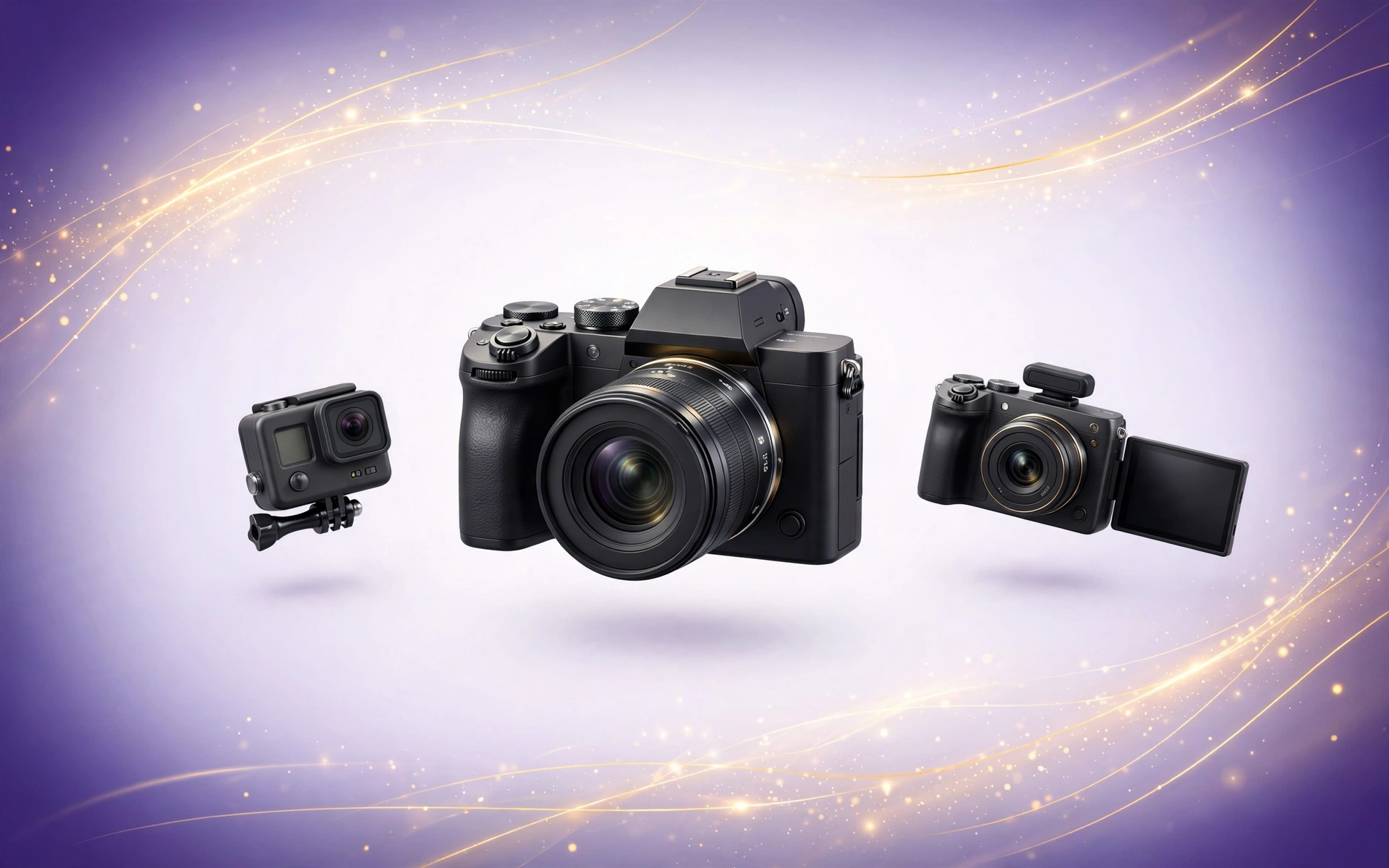

Your phone takes decent photos. Nobody’s arguing that. But the moment you want real background blur, real zoom that doesn’t turn to mush, or indoor shots that don’t dissolve into grain, a dedicated camera earns its place in your bag. The leap in image quality is bigger than most people expect.
Here’s the good news: beginner cameras in 2026 are friendlier than they’ve ever been. You don’t need to learn manual mode on day one, and you definitely don’t need to spend a fortune. The best starter cameras practically hold your hand — smart auto modes, guided menus, flip-out screens — while leaving plenty of room to grow when the photography bug bites. These five are genuinely easy to live with.
As an Amazon Associate I earn from qualifying purchases.
The 5 best cameras for beginners in 2026
1. Canon EOS R50 — the easiest all-rounder
If you want one camera that just makes the decision simple, this is it. The EOS R50 pairs an APS-C sensor with Canon’s famously pleasant color science, so skin tones and everyday scenes look great straight out of the camera — no editing degree required.
It’s small for a mirrorless camera, the vari-angle touchscreen flips around for selfies and vlogging, and it shoots 4K video for when you inevitably decide to film something. Canon’s guided interface is arguably the least intimidating in the business; the menus actually explain what settings do instead of assuming you already know.
The honest caveat: Canon’s RF-S lens lineup is still growing, so your affordable lens options are narrower than Sony’s. The kit lens covers everyday shooting just fine, and you can always adapt older Canon glass later. For a first camera, the R50 is the safest recommendation on this list.
2. Sony ZV-E10 — best for video-first beginners
Bought your first camera mainly to film? Start here. The ZV-E10 was designed from the ground up for creators: flip-out screen, a big record button you can’t miss, and features like background defocus switching that do the fancy stuff for you.
Underneath, it’s a proper APS-C mirrorless camera, so stills are genuinely good too — not an afterthought. And Sony’s E-mount has the deepest bench of affordable lenses in the business, which matters a lot when you outgrow the kit lens and want a cheap 50mm or a wide-angle vlogging lens.
Two things to know: there’s no viewfinder, so you’re composing on the screen at all times (fine for most beginners, annoying for a few). And Sony’s menus have a reputation for being labyrinthine — though the ZV-E10’s simplified interface keeps the important stuff within reach.
3. Nikon Z30 — the no-fuss vlogger
The Z30 is Nikon’s love letter to people who want great video without a learning curve. It’s essentially a stills-capable camera tuned for creators: APS-C sensor, crisp 4K video, a flip-out screen, and a dedicated tally light so you always know when you’re recording.
What stands out is how little gets in your way. There are fewer buttons to accidentally press, fewer modes to get lost in. Pair it with one of Nikon’s compact Z DX lenses and you’ve got a setup that slips into a small bag and just works.
The trade-off is the same as the Sony’s: no electronic viewfinder. If you shoot mostly photos in bright sunlight, composing on a screen can be a pain. But if your world is video, TikToks, and YouTube, the Z30 is one of the least stressful ways to get genuinely good footage.
4. Fujifilm X-T30 II — for people who love the look
Some cameras take photos. Fujifilm cameras make photos you’ll actually want to look at again. The X-T30 II’s film simulations — built-in color profiles inspired by classic film stocks — produce gorgeous JPEGs with zero editing. For a beginner, that’s magic: great-looking shots from day one.
It’s an APS-C mirrorless camera with proper manual dials on top, which sounds intimidating but is actually delightful — you learn what shutter speed and exposure compensation do by feel, just by turning dials and watching the result. It shoots 4K video too, so it’s no slouch for hybrid shooters.
Fair warning: Fujifilm’s menus are quirkier than Canon’s or Nikon’s, and there’s less hand-holding. But if you care about how your photos look more than spec sheets, this is the camera that’ll make you fall in love with shooting.
5. Panasonic Lumix G7 — the budget king
Let’s be upfront: the G7 is an older camera, originally released back in 2015. But it’s still sold new, it shoots 4K video, and it routinely costs far less than anything else here — often hundreds less. For a beginner on a tight budget, that math is hard to argue with.
You get a Micro Four Thirds sensor (smaller than APS-C, but perfectly capable for learning), a fully articulating screen, a viewfinder, and access to a huge, affordable lens ecosystem shared with Olympus. It’s a complete, honest camera that teaches you everything without punishing your wallet.
The compromises are real: the smaller sensor means noisier low-light shots, and the contrast-based autofocus can hunt during video. But as a “is photography even my thing?” first camera, nothing else delivers this much for this little.
How to choose your first camera
Go mirrorless, full stop. DSLRs are effectively discontinued across the industry at this point. Every camera on this list is mirrorless, which means smaller bodies, better video, and autofocus that actually tracks faces and eyes.
Don’t overthink sensor size. APS-C versus Micro Four Thirds sounds like a big deal in forums; in practice, both take excellent photos for a beginner. Composition and light matter roughly a hundred times more than the sensor in your first year.
Think about lenses, not just the body. You’ll probably keep your lenses longer than your first camera body. Sony’s E-mount has the most affordable options; Canon’s RF-S mount is growing; Fujifilm’s X-mount lenses are superb but pricier. It’s worth a quick glance at what’s available before you commit.
Match the camera to what you’ll actually shoot. Mostly video? Prioritize a flip screen and a mic input (all five here have both). Mostly stills of kids, travel, and life? Prioritize handling and a viewfinder.
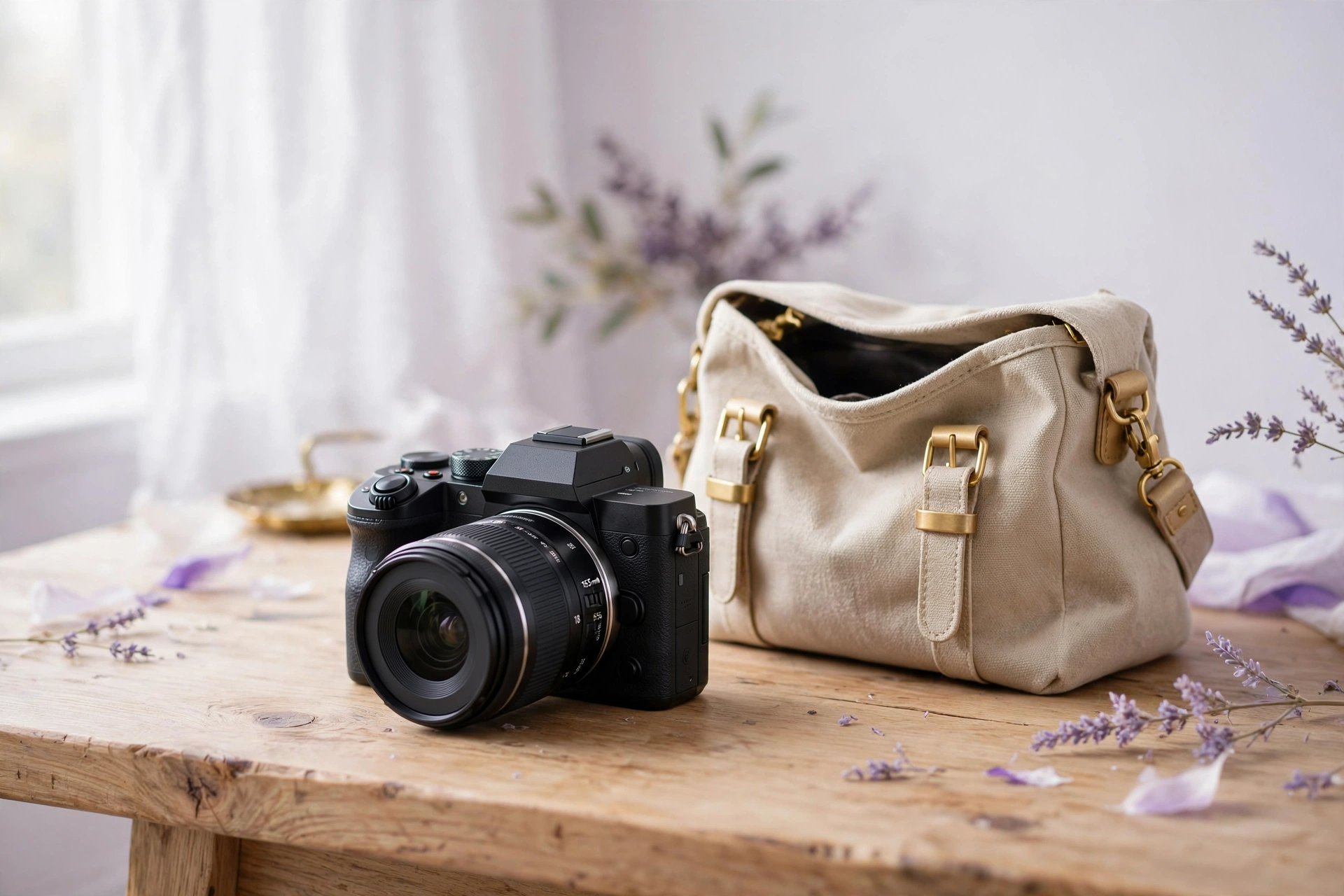
Budget for the extras. Whatever body you pick, set aside a little for a fast memory card, a spare battery (mirrorless cameras chew through them), and maybe a simple camera bag. These small things affect your daily experience more than megapixels ever will.
Beginner camera FAQs
Do I need to learn manual mode right away?
No — and don’t let anyone shame you about it. Every camera here has excellent auto modes that will take great photos while you learn composition and lighting, which are the skills that actually matter first. Manual mode will still be there when you’re curious.
Mirrorless or DSLR in 2026?
Mirrorless. The industry has moved on, lens development is all mirrorless now, and the shooting experience — seeing your exposure live in the viewfinder — is genuinely easier for beginners.
Is the kit lens good enough to start?
Yes. Kit lenses get mocked by enthusiasts, but modern ones are sharp, stabilized, and cover the most useful focal lengths. Shoot with it for six months; it’ll teach you exactly which lens you want next.
How much should a beginner spend on a first camera?
Typically somewhere around $500 to $900 for the camera plus kit lens gets you a genuinely great starter setup in 2026. Below that you’re compromising a lot; above that you’re paying for features you won’t use yet.
Should I buy used?
It’s a legitimate way to stretch your budget — camera bodies depreciate fast. But for your first camera, buying new gets you a warranty and zero mystery about shutter count or sensor condition. Worth the peace of mind.
The bottom line
You can’t really go wrong here, but here’s the short version: the Canon EOS R50 is the easiest recommendation for most people — friendly, capable, great colors. Go Sony ZV-E10 if video is the priority, Nikon Z30 if you want the simplest vlogging experience, Fujifilm X-T30 II if you care about the look of your photos, and Panasonic G7 if the budget is tight and you just want to start.
The best camera is the one you’ll actually carry. Pick the one that matches what you shoot, keep it simple at first, and don’t look back — your phone will start feeling like a backup within a month.
Affiliate Disclosure: This article contains affiliate links. If you purchase through them, we may earn a commission at no extra cost to you.
Where to Buy: Check Price on Amazon · Compare Prices on Daraz · Check Daraz Deals · Check AliExpress Price · See AliExpress Deals
Check the price on AliExpress — the global marketplace with millions of tech products.
As an AliExpress affiliate, we may earn a commission on qualifying purchases.