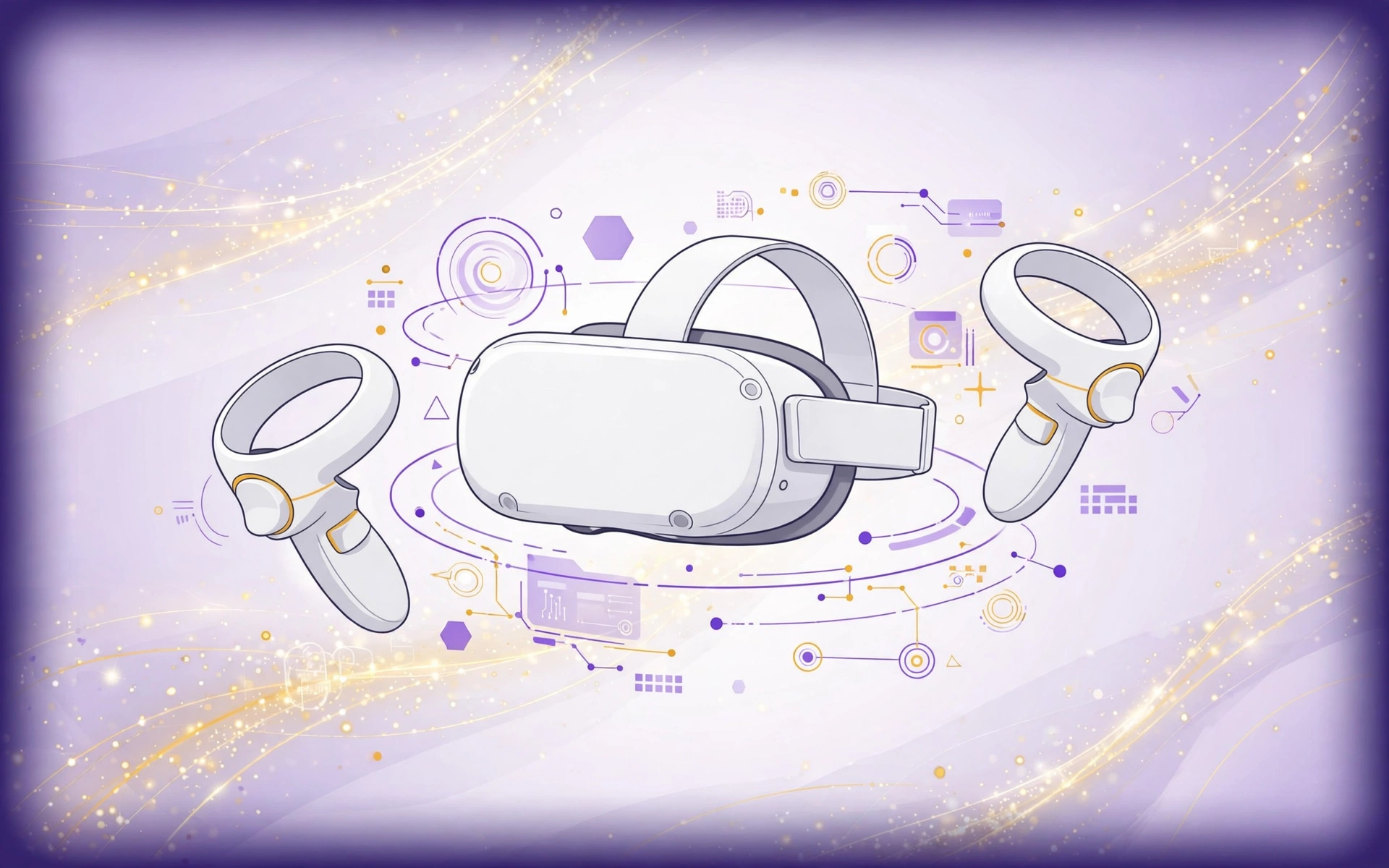
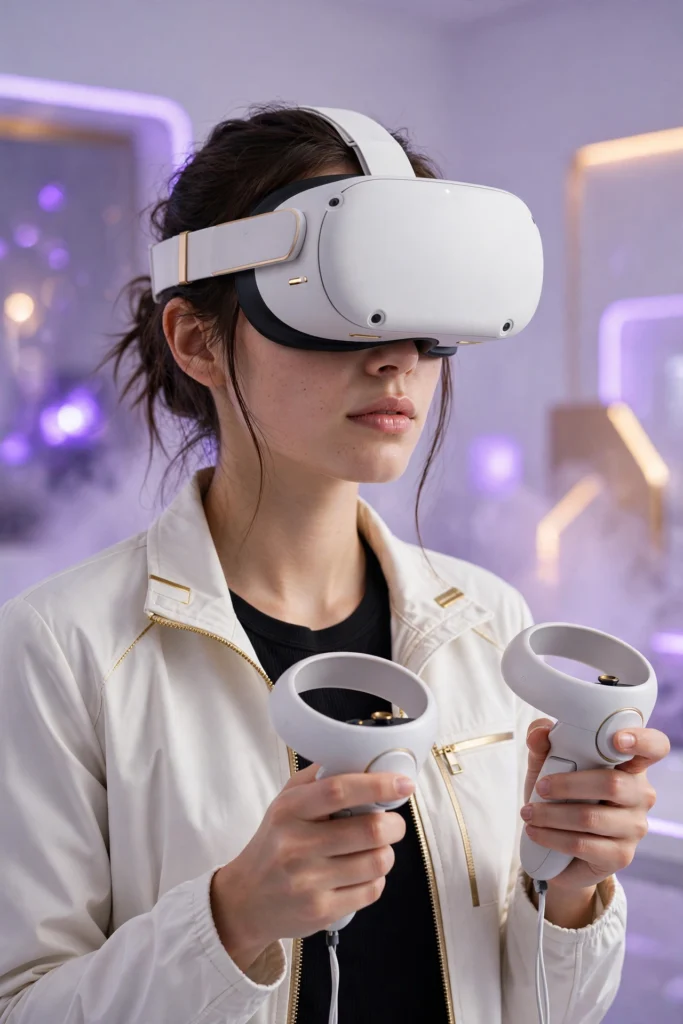
Virtual reality finally feels like a mature category. Headsets are lighter, sharper, and cheaper than they were a few years ago, and the game libraries have grown up too. Whether you want to sweat through a boxing workout, explore alien planets, or just watch movies on a screen the size of a cinema, there’s a headset with your name on it.
The trick is that no single headset is “the best” for everyone. A PlayStation owner has a different answer than a PC gamer, and a casual buyer has a different answer than a VR enthusiast. So let’s walk through the five headsets that actually matter in 2026, and figure out which one fits your life.
As an Amazon Associate I earn from qualifying purchases.
The 5 Best VR Headsets in 2026
1. Meta Quest 3S — Best for Most People
If you just want to buy one headset and be done with it, this is the one. The Quest 3S took the internals that matter — the Snapdragon XR2 Gen 2 chip, the Touch Plus controllers, the full Quest software library — and put them in a cheaper package by reusing the older fresnel lenses and lower-resolution displays from the Quest 2 era.
On paper that sounds like a compromise, and it kind of is. The visuals aren’t as crisp as the Quest 3’s pancake lenses. But in practice? The game library is identical, the performance is identical, and the price is dramatically lower. For someone buying their first headset, that tradeoff is a no-brainer. You’ll be playing the same Beat Saber, the same Asgard’s Wrath 2, the same everything — just with slightly softer edges.
It’s also worth noting the Quest 3S is fully standalone. No PC, no console, no wires. Charge it, put it on, and you’re in. That simplicity is why Meta keeps winning the mainstream.
2. Meta Quest 3 — Best Display and Mixed Reality
Think of the Quest 3 as the 3S’s sharper sibling. Same chip, same controllers, same library — but with pancake lenses and higher-resolution displays that make everything noticeably crisper. Text is easier to read, distant objects look cleaner, and the whole image has that premium feel.
The bigger upgrade, honestly, is mixed reality. The Quest 3’s full-color passthrough cameras are genuinely good, which makes mixed-reality apps — where virtual objects sit in your real room — actually usable rather than a gimmick. If you care about productivity apps, virtual monitors, or the latest MR games, the Quest 3 earns its premium.
So: Quest 3S if you want the best value, Quest 3 if you want the best visuals and mixed reality. Same ecosystem either way, so you can’t really go wrong.
3. PlayStation VR2 — Best for PS5 Owners
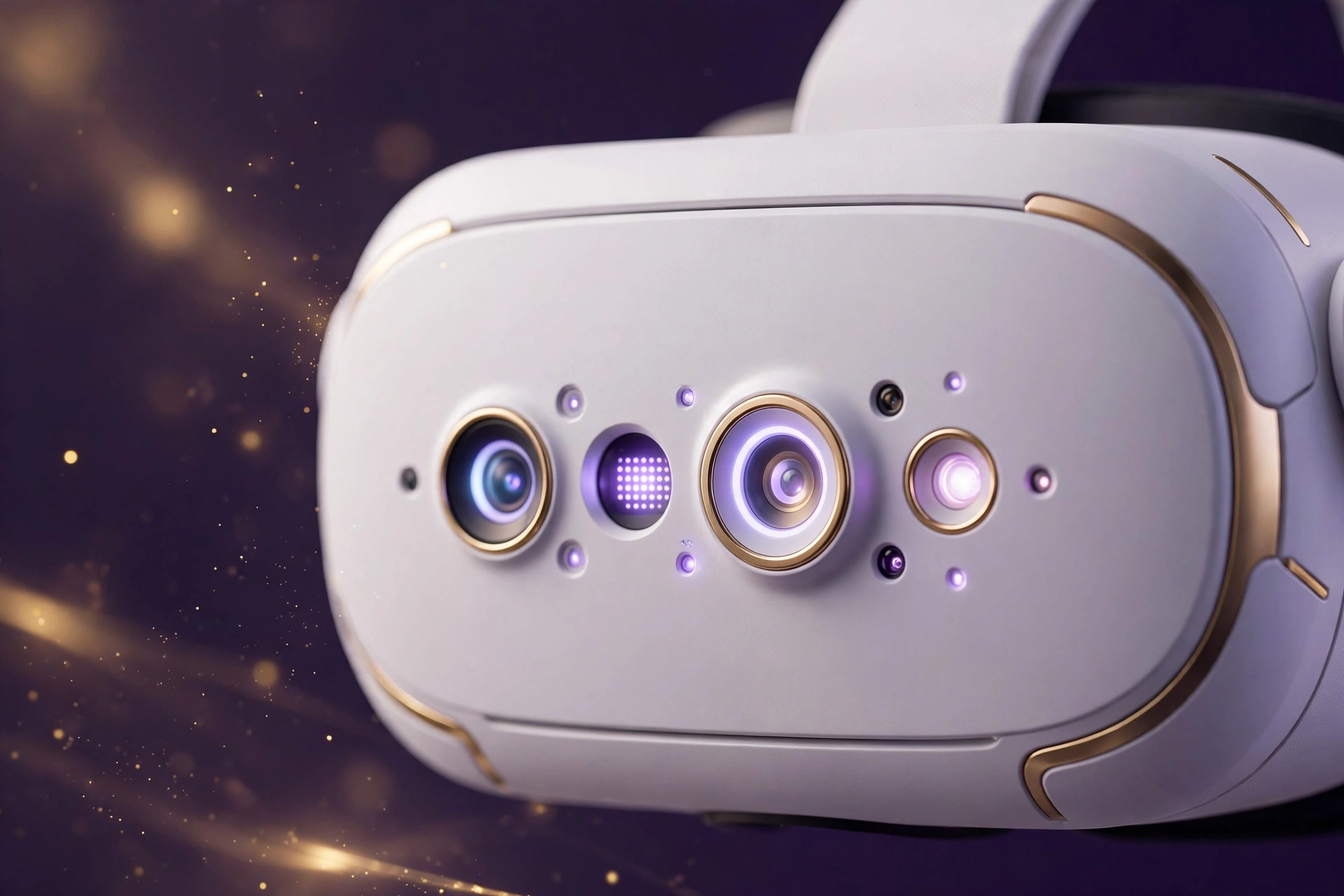
Here’s the thing about the PSVR2: if you own a PS5, it’s not even a contest. Nothing else in its price range touches it. The OLED displays deliver those deep, inky blacks that LCD headsets can’t match, the headset haptics add a surprising amount of immersion, and games like Horizon Call of the Mountain and Gran Turismo 7 in VR are legitimate system-sellers.
The catch — and it’s a real one — is that it only works with the PS5. No PC support out of the box, no standalone mode. You’re buying into Sony’s ecosystem, and Sony’s VR software output has been… let’s call it inconsistent. The hardware is superb; the library is thinner than the Quest’s.
But if you’ve got a PS5 sitting under your TV and you’ve been VR-curious, this is the easiest recommendation on the list. Just know what you’re signing up for.
4. Apple Vision Pro — Best Premium Experience (If Money Is No Object)
Let’s be real: the Vision Pro isn’t competing with the Quest. It’s a $3,500 spatial computer that happens to do VR brilliantly. The micro-OLED displays are in a different league — the sharpness is almost hard to believe until you see it — and the eye-and-hand tracking feels like the future.
But it’s heavy, the battery hangs off a cable, and the gaming library is thin compared to Quest or PSVR2. This is a device for people who want the absolute best screens and are willing to pay Apple prices for them. For everyone else, it’s fascinating to read about and easy to skip.
5. Valve Index — The Enthusiast Mention
The Index is old at this point — it launched back in 2019 — but it keeps showing up in conversations for a reason. The off-ear speakers are still the best audio in VR, the controllers with individual finger tracking remain unmatched, and the 144Hz refresh rate keeps motion buttery.
Should you buy one in 2026? Honestly, probably not unless you’re a dedicated PCVR enthusiast who knows exactly why they want it. Valve’s been quiet about what’s next, and newer headsets have caught up in most areas. But it deserves the mention — it set the bar that everyone else is still chasing in certain respects.
How to Choose: The Real Buying Advice
Start with your platform. PS5 owner who mainly wants to game? PSVR2. PC gamer with a beefy rig? A PCVR-focused headset (or a Quest via Link cable) makes sense. No gaming hardware at all? Get a Quest — it’s the only one that’s fully self-contained.
Be honest about your budget. VR is one of those categories where the cheapest good option (Quest 3S) gets you 90% of the experience. The upgrades beyond that are real but incremental — sharper lenses, better passthrough, nicer screens. Don’t stretch your budget for specs you’ll stop noticing after a week.
Think about comfort. This is the spec sheet nobody reads. A headset lives on your face, and weight distribution matters more than most people expect. If you wear glasses, check compatibility — some headsets accommodate them better than others. And if you’re buying for fitness games, a lighter headset with a good strap (or a plan to buy an aftermarket strap) is worth prioritizing.
Consider the library, not just the hardware. A headset is only as good as the things you can do with it. The Quest store is the largest and most active by a wide margin. PSVR2 has Sony’s exclusives. PCVR has the deepest back catalog. Buy into the ecosystem you’ll actually use.
Frequently Asked Questions
Do I need a powerful PC for VR in 2026?
Not necessarily. The Meta Quest headsets are fully standalone — no PC required. You only need a gaming PC if you specifically want PCVR experiences (or want to use a Quest as a PCVR headset via Link or Air Link).
Is VR bad for your eyes?
There’s no established evidence that VR damages eyesight in normal use, but long sessions cause eye strain and fatigue like any screen does. Take breaks, and if you wear glasses, look into prescription lens inserts rather than cramming frames inside the headset.
Can kids use VR headsets?
Meta recommends 10+ for Quest headsets (with parental controls and supervision), Sony says 12+ for PSVR2. Fit is a real issue for smaller heads, and IPD (interpupillary distance) adjustment range matters. Supervise young users and keep sessions short.
How much space do I need?
For seated or standing experiences, barely any. For room-scale gaming, most headsets want roughly a 6.5 x 6.5 foot clear area. The Quest’s guardian boundary system makes setup painless — you literally draw your play space and it warns you when you’re near the edges.
Is the Quest 3S too much of a downgrade from the Quest 3?
For most buyers, no. You give up some display sharpness (fresnel vs pancake lenses, lower resolution), but the chip, controllers, tracking, and game library are identical. It’s the smart buy unless crisp visuals or mixed reality are priorities for you.
The Bottom Line
The VR market in 2026 is the healthiest it’s ever been, and that’s good news for buyers. The Meta Quest 3S is the default answer for most people — affordable, standalone, huge library. Step up to the Quest 3 for sharper visuals, grab the PSVR2 if you’re in Sony’s world, and admire the Vision Pro from afar unless budget is no object.
Whatever you pick, the real advice is this: buy the headset you’ll actually use, not the one with the best spec sheet. The best VR headset is the one that doesn’t collect dust.
Affiliate Disclosure: This article contains affiliate links. If you purchase through them, we may earn a commission at no extra cost to you.
Where to Buy: Check Price on Amazon · Compare Prices on Daraz · Check Daraz Deals · Check AliExpress Price · See AliExpress Deals
Check the price on AliExpress — the global marketplace with millions of tech products.
As an AliExpress affiliate, we may earn a commission on qualifying purchases.