
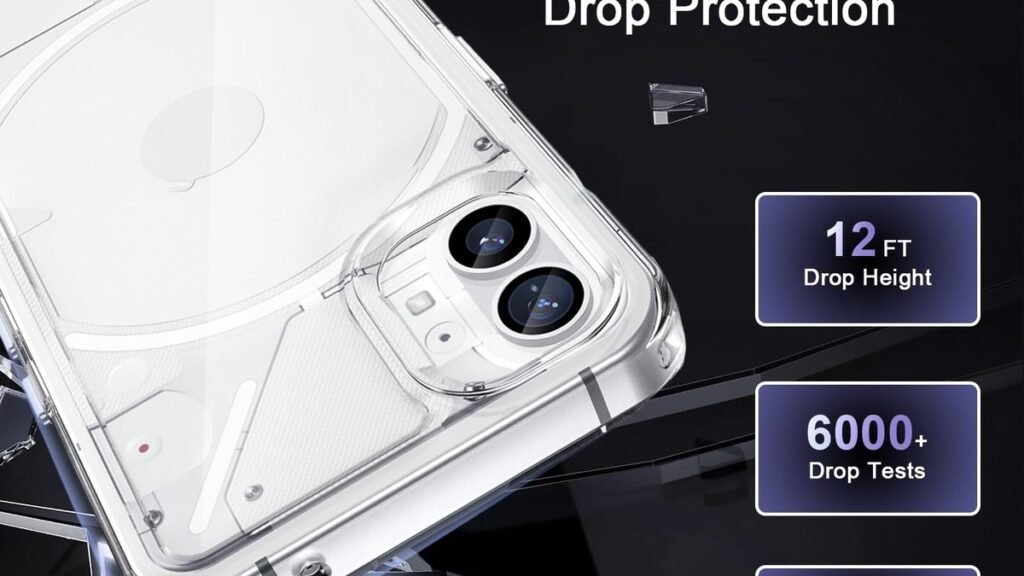
<p>Your phone probably cost hundreds of dollars, so spending another $20–$50 to protect it is money well spent. The trade-off has always been the annoying part: real protection meant a bulky brick, and slim style meant crossing your fingers. The <strong>best protective phone case of 2026</strong> finally kills that compromise — you can get serious drop protection in a case that looks good and feels good in your hand.</p>
<p>This guide covers four picks for four different priorities: the OtterBox Commuter for balanced everyday protection, Pitaka’s aramid fiber cases for ultra-thin minimalism, the OtterBox Defender Pro for maximum ruggedness, and Casetify for style and personalization. We’ll also break down the materials — aramid fiber, TPU, polycarbonate — so you know what you’re actually paying for. (Protecting a brand-new phone? Our <a href=”https://genzgadgetszone.com/iphone-17-why-its-selling-like-crazy-again/”>iPhone 17 overview</a> explains what’s worth protecting.)</p>
<h2>Why a Good Case Actually Matters</h2>
<p>A case isn’t just about stopping a cracked screen. Keeping your phone in good shape protects its resale value: a phone with a clean frame and back will sell or trade in for noticeably more than one covered in scratches and dents. A fairly cheap case protects that value from day one.</p>
<p>Then there’s the simple physics of modern phones. Glass backs and camera bumps make today’s flagships more slippery and damage-prone than the plastic phones of old — and back-glass repairs are some of the priciest fixes out there. Throw MagSafe into the mix and your case choice affects charging too: a case that’s too thick or made of the wrong materials can weaken the magnetic hold.</p>
<h2>Case Materials, Explained</h2>
<p>Before the picks, a quick primer on what cases are actually made of — because the material is what decides the protection-versus-style trade-off.</p>
<p><strong>TPU (thermoplastic polyurethane)</strong> is the soft, rubbery stuff in most everyday cases. It’s flexible, soaks up shock well, and gives you good grip — though clear TPU tends to yellow over time. Most “protective” cases use a TPU inner layer for impact absorption.</p>
<p><strong>Polycarbonate</strong> is the hard plastic shell. Rigid, scratch-resistant, and good at spreading impact force across the case — but it can crack under extreme hits and doesn’t absorb much shock on its own. The best protective cases pair a polycarbonate outer shell with a TPU inner layer: hard outside, soft inside.</p>
<p><strong>Aramid fiber</strong> (the material in Pitaka cases) is the interesting one. It’s the fiber used in aerospace and ballistic gear — extremely strong for its weight — and crucially, it doesn’t block wireless signals the way carbon fiber can. A 600D aramid fiber case can measure under a millimeter thin and still give real structure and scratch protection. The trade-off: thin aramid absorbs less impact energy than a thick TPU/polycarbonate build, so it’s for scratch protection and minor drops, not construction-site duty.</p>
<h2>How to Choose a Phone Case</h2>
<h3>1. Be honest about how you treat your phone</h3>
<p>This is the whole decision, so be honest. If you drop your phone regularly, work outdoors, or hand it to small children, buy the rugged case and accept the bulk — the Defender Pro exists for you. If you’re careful, keep your phone in a pocket rather than a tool belt, and mostly worry about scratches and the occasional table-height drop, a slim case will make you happier every day. Most people overestimate their clumsiness and end up resenting a bulky case they never needed.</p>
<h3>2. Check MagSafe and Qi2 compatibility</h3>
<p>In 2026, your case is part of your charging setup. Look for cases with built-in magnetic arrays lined up to the MagSafe/Qi2 standard — they’ll snap onto chargers, wallets, and car mounts properly. Thin aramid fiber cases are especially good with magnets since the material is thin and signal-friendly. A thick non-magnetic case can make wireless charging slow or flaky, and magnetic accessories may slide right off.</p>
<h3>3. Consider the camera bump and buttons</h3>
<p>Raised edges around the camera module and screen are what stop the most common damage: the flat drop onto a table. Make sure the case’s camera lip clears your phone’s camera bump, and that any button covers still give a satisfying click. Precise cutouts for ports and speakers matter too — a case that muffles your speaker or fights your charging cable will annoy you daily.</p>
<h2>The Best Protective Phone Cases of 2026</h2>
<h3>Best for Everyday Protection: OtterBox Commuter</h3>
<p>The OtterBox Commuter is the easy default recommendation for a reason. It uses a <strong>two-layer design</strong>: a softer inner layer that soaks up impact, wrapped in a harder outer shell that shrugs off scratches and everyday wear. OtterBox says it handles repeated drops from around waist height, and the build includes a cover for the charging port that keeps dust and lint out.</p>
<p>It’s slim enough to slide in and out of a pocket without a fight — this is no rugged brick — while still offering meaningfully more protection than a fashion case. MagSafe wireless charging works through it, so your magnetic accessories and chargers keep working as normal. Pair it with a <a href=”https://genzgadgetszone.com/the-best-phone-stands-and-grips-of-2026-small-accessory-big-difference/”>phone grip or stand</a> and you’ve covered both drop protection and everyday usability.</p>
<p>The only real downside is the two-piece construction: installing it isn’t hard, but it’s less convenient than snapping on a one-piece case, and taking it off for cleaning takes a moment.</p>
<p><strong>Pros:</strong></p>
<ul>
<li>Proven two-layer protection without excessive bulk</li>
<li>Handles repeated waist-height drops</li>
<li>Port cover keeps dust and lint out</li>
<li>MagSafe-compatible for wireless charging and accessories</li>
</ul>
<p><strong>Cons:</strong></p>
<ul>
<li>Two-piece design is slightly less convenient than one-piece cases</li>
<li>Not enough for extreme drops or harsh worksites</li>
</ul>
<p><strong>Best for:</strong> Most people — the balanced choice that protects against real-world drops without turning your phone into a brick.</p>
<h3>Best Ultra-Thin Case: Pitaka</h3>
<p>If you hate bulky cases, Pitaka takes a completely different approach. Its cases use <strong>600D aramid fiber</strong> — the aerospace-grade material that’s absurdly strong for its weight — formed into a shell so thin it barely changes how your phone feels. The woven texture looks and feels premium, and because aramid fiber doesn’t mess with wireless signals, MagSafe accessories attach with a reassuring snap.</p>
<p>The trade-off is honest and worth taking seriously: this isn’t the case for someone who drops their phone regularly. Thin aramid fiber is brilliant at scratch protection and minor knocks, but it can’t absorb a hard drop’s energy the way a thick TPU case can. If you’re careful with your devices and mostly want to keep that naked-phone feel with real scratch defense, Pitaka makes a lot of sense. It’s the case for people who’d otherwise go caseless.</p>
<p><strong>Pros:</strong></p>
<ul>
<li>Incredibly thin and light — closest to going caseless</li>
<li>Premium woven aramid fiber texture</li>
<li>Excellent MagSafe compatibility (thin, signal-friendly material)</li>
<li>Real scratch and minor-impact protection</li>
</ul>
<p><strong>Cons:</strong></p>
<ul>
<li>Not designed for hard drops — protection has limits</li>
<li>Premium pricing for minimal material</li>
</ul>
<p><strong>Best for:</strong> Minimalists who hate bulk and are careful with their phones — maximum style, sensible scratch protection.</p>
<h3>Best for Maximum Drop Protection: OtterBox Defender Pro</h3>
<p>The OtterBox Defender Pro is Pitaka’s opposite: thick, rugged, and built for people who’d rather carry too much protection than too little. It has OtterBox’s <strong>DROP+ certification</strong> and is built to survive repeated drops from more than four feet. Multi-layer construction, port covers, and a textured grip make it the case for construction sites, outdoor work, parenting small children, and chronic phone-droppers.</p>
<p>The downside is obvious and unavoidable: this is not a slim case. It adds real bulk and weight. But maximum protection and minimum bulk are physically incompatible, and the Defender Pro is upfront about which side it’s on.</p>
<p><strong>Pros:</strong></p>
<ul>
<li>Maximum drop protection — rated for drops over four feet</li>
<li>DROP+ certified multi-layer construction</li>
<li>Textured grip reduces drops in the first place</li>
<li>Port covers against dust and debris</li>
</ul>
<p><strong>Cons:</strong></p>
<ul>
<li>Bulky and heavy — very noticeable in a pocket</li>
<li>Overkill (and annoying) if you don’t need this level of protection</li>
</ul>
<p><strong>Best for:</strong> Outdoor workers, parents of small kids, and anyone whose phone has a history of meeting concrete.</p>
<h3>Best for Style: Casetify</h3>
<p>If personalization matters to you, Casetify is hard to ignore. The <strong>Impact series</strong> gives you solid everyday protection with an enormous range of designs, artist collaborations, and customization options — your case can look like part of your outfit rather than a chunk of protective plastic. The <strong>Bounce Case</strong> takes protection further, with reinforced corners engineered to handle serious impacts.</p>
<p>The thing to understand about Casetify is that looking good and being protected aren’t mutually exclusive here — the Bounce case in particular is genuinely protective, not just decorative. Customization extends to MagSafe-compatible designs too, so your charger-and-wallet setup keeps working.</p>
<p><strong>Pros:</strong></p>
<ul>
<li>Huge range of designs, artists, and custom options</li>
<li>Bounce Case offers genuinely serious drop protection</li>
<li>MagSafe-compatible options available</li>
<li>High-quality print that resists fading and wear</li>
</ul>
<p><strong>Cons:</strong></p>
<ul>
<li>Premium pricing, especially for custom designs</li>
<li>Style-focused models protect less than the Bounce line — check which you’re buying</li>
</ul>
<p><strong>Best for:</strong> Anyone who wants their case to express personal style without giving up real protection.</p>
<img src=”https://genzgadgetszone.com/wp-content/uploads/2026/10/the-best-phone-cases-of-2026-drop-protection-and-style-finally-coexist-in1.jpg” alt=”THE BEST PHONE CASES OF 2026 — DROP PROTECTION AND STYLE FINALLY COEXIST” loading=”lazy” />
<h2>Phone Case Comparison Table</h2>
<table>
<tbody><tr><th>Case</th><th>Material</th><th>Profile</th><th>Drop protection</th><th>Best for</th></tr>
<tr><td>OtterBox Commuter</td><td>TPU + polycarbonate</td><td>Slim</td><td>Waist-height drops</td><td>Everyday balance</td></tr>
<tr><td>Pitaka</td><td>600D aramid fiber</td><td>Ultra-thin</td><td>Scratches, minor drops</td><td>Minimalists</td></tr>
<tr><td>OtterBox Defender Pro</td><td>Multi-layer rugged</td><td>Bulky</td><td>4ft+ drops, DROP+ certified</td><td>Maximum protection</td></tr>
<tr><td>Casetify (Impact/Bounce)</td><td>EcoShock, custom prints</td><td>Slim–medium</td><td>Everyday to serious (Bounce)</td><td>Style + protection</td></tr>
</tbody></table>
<img src=”https://genzgadgetszone.com/wp-content/uploads/2026/10/the-best-phone-cases-of-2026-drop-protection-and-style-finally-coexist-in2.jpg” alt=”THE BEST PHONE CASES OF 2026 — DROP PROTECTION AND STYLE FINALLY COEXIST” loading=”lazy” />
<div class=”ggz-affiliate-box” style=”background:#f7f9fc;border:1px solid #e2e8f0;border-radius:12px;padding:20px 22px;margin:28px 0;text-align:center;”><a href=”https://www.amazon.com/dp/B0FT425K97/?tag=genzgadgetszo-20″ target=”_blank” rel=”nofollow sponsored noopener” style=”display:inline-block;background:#ff9900;color:#fff;font-weight:700;padding:12px 28px;border-radius:8px;text-decoration:none;”>Check Price on Amazon</a><p style=”font-size:12px;color:#718096;margin:10px 0 0;”>As an Amazon Associate I earn from qualifying purchases.</p></div>
<h2>FAQs About Phone Cases</h2>
<h3>Do I really need a case if I have AppleCare+ or insurance?</h3>
<p>Insurance covers catastrophic damage, not the daily grind of scratches and dents — and a case preserves resale value, since a pristine phone trades in for more. That said, if you’re genuinely careful, insured, and hate cases, going caseless is a legitimate choice. Just know that back-glass repairs on modern flagships stay expensive even after the coverage deductible.</p>
<h3>Will a thick case interfere with MagSafe charging?</h3>
<p>It can. MagSafe depends on precise magnet alignment and a short distance between the coils. Very thick cases, or cases without built-in magnetic arrays, weaken the connection. All four picks here are MagSafe-compatible — but if you buy any other case, check for proper magnetic alignment rather than just “works with wireless charging.”</p>
<h3>What’s the difference between aramid fiber and carbon fiber cases?</h3>
<p>Both are strong and light, but aramid fiber leaves wireless signals alone while carbon fiber can interfere — and that matters for MagSafe charging and cellular reception. Aramid is also more flexible and crack-resistant. That’s why brands like Pitaka picked aramid for phone cases: you get the premium woven look without carbon fiber’s signal compromises.</p>
<h3>How often should I replace my phone case?</h3>
<p>When it stops protecting: stretched-out TPU that no longer grips, cracked polycarbonate, yellowing that bugs you, or corners that have absorbed their last drop. A quality case survives a year or more of daily use; budget TPU may need replacing sooner. And always replace it when you change phones — even same-size models have different camera and button layouts.</p>
<h3>Are expensive cases actually better than cheap ones?</h3>
<p>Up to a point. The jump from a $5 no-name case to a $30–$50 quality case buys real engineering: tested drop ratings, precise cutouts, proper MagSafe magnets, and materials that don’t yellow within a month. Past about $50 you’re mostly paying for brand, design, and premium materials — worth it if you value them, but not more protective.</p>
<h2>Final Verdict</h2>
<p>The best protective phone case of 2026 comes down to one honest question: how do you actually treat your phone? Careful minimalists should get the Pitaka. Most people should get the OtterBox Commuter. Chronic droppers and outdoor workers need the Defender Pro. And if your case is a fashion statement, Casetify’s Bounce line proves style and protection can share a pocket.</p>
<p>Whatever you pick, the rule is simple: the best case is the one you’ll actually keep on. Buy for your real life — and your phone will pay you back at trade-in time.</p>
<img src=”https://genzgadgetszone.com/wp-content/uploads/2026/10/the-best-phone-cases-of-2026-drop-protection-and-style-finally-coexist-in1.jpg” alt=”THE BEST PHONE CASES OF 2026 — DROP PROTECTION AND STYLE FINALLY COEXIST” loading=”lazy” />
Affiliate Disclosure: This article contains affiliate links. If you purchase through them, we may earn a commission at no extra cost to you.
Where to Buy: Check Price on Amazon · Compare Prices on Daraz · Check Daraz Deals · Check AliExpress Price · See AliExpress Deals
Check the price on AliExpress — the global marketplace with millions of tech products.
As an AliExpress affiliate, we may earn a commission on qualifying purchases.











Pingback: MagSafe Phone Grip and Stand: Best Picks 2026