
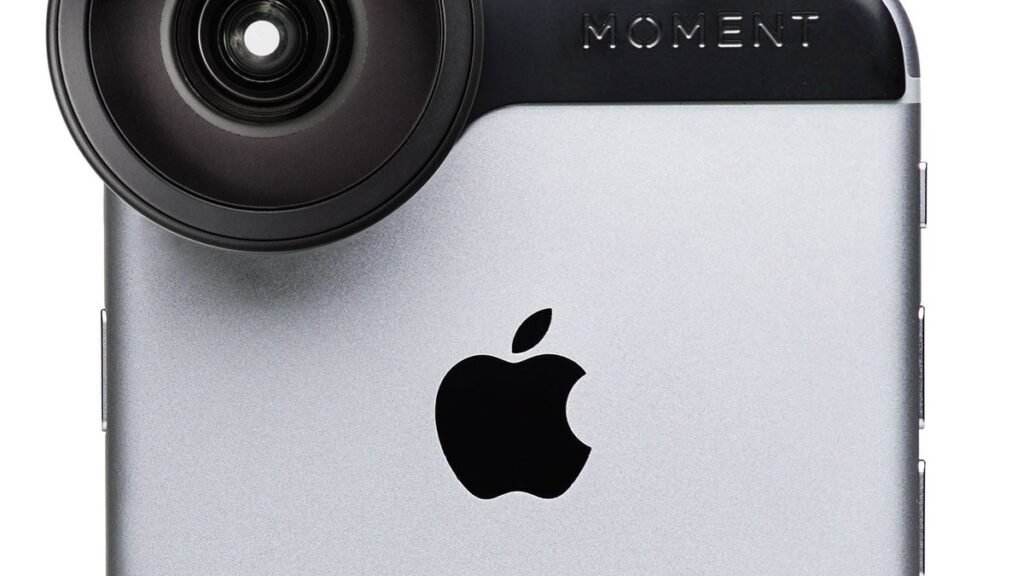
Your phone’s camera is already excellent — so why are the best phone lenses of 2026 still selling so well? Because software has limits. A phone can sharpen, crop, and brighten an image all day, but it can’t conjure detail the optics never captured. An external phone lens attachment puts real glass in front of your sensor, and for certain kinds of photography — macro and long-range telephoto especially — that makes a difference no amount of digital zoom can fake.
This guide covers the phone lenses worth your money in 2026: a premium all-rounder from Moment, a dedicated macro specialist from ULANZI, and an extreme-zoom option from APEXEL. We’ll also cover the thing most buyers get wrong — mounting — because a great lens on a bad mount takes bad photos.
Why External Phone Lenses Still Matter in 2026
Modern flagships have impressive main cameras, but ultra-wide, macro, and telephoto shooting still involve compromises. The “macro mode” on many phones is really a cropped, sharpened image from a tiny sensor. The 10x or 20x zoom button in your camera app is often digital zoom with AI guesswork filling the gaps. Both can look fine on a phone screen — and both fall apart the moment you crop, print, or look closely.
External lenses change what’s physically possible. A proper macro lens lets you focus close enough to photograph the texture of a leaf, the ridges of a fingerprint, or the compound eye of an insect — detail your phone’s own lens can’t resolve because it physically can’t focus that near. A real optical telephoto holds onto detail at distance without digital zoom’s smudgy artifacts. A fisheye gives you a field of view no built-in lens offers, handy for tight indoor spaces and creative shots.
There are real limits, of course. External lenses add bulk, they slow you down, and cheap ones can bring distortion, vignetting, or chromatic aberration with them. They also shine brightest in good light — low-light shooting magnifies every optical flaw. But if you enjoy experimenting with photography, a phone lens attachment is one of the most cost-effective upgrades you can buy.
How to Choose the Right Phone Lens (Mounting Is Everything)
The lens itself is only half the equation. How it attaches to your phone decides everything about image quality, so get your head around the three mounting systems before you spend anything.
1. Case-based mounts: the most reliable option
Moment built its name on this system. You buy a Moment phone case for your specific phone, and each lens twists into a bayonet mount sitting over your camera. Alignment is exact every single time, there’s no fiddling, and the lens stays put. iPhone support is the strongest, with cases for recent models. Some Samsung and Pixel models get cases too, but Android coverage is thinner — check Moment’s site for your exact model before ordering a lens.
2. Universal clip mounts: convenient but fiddly
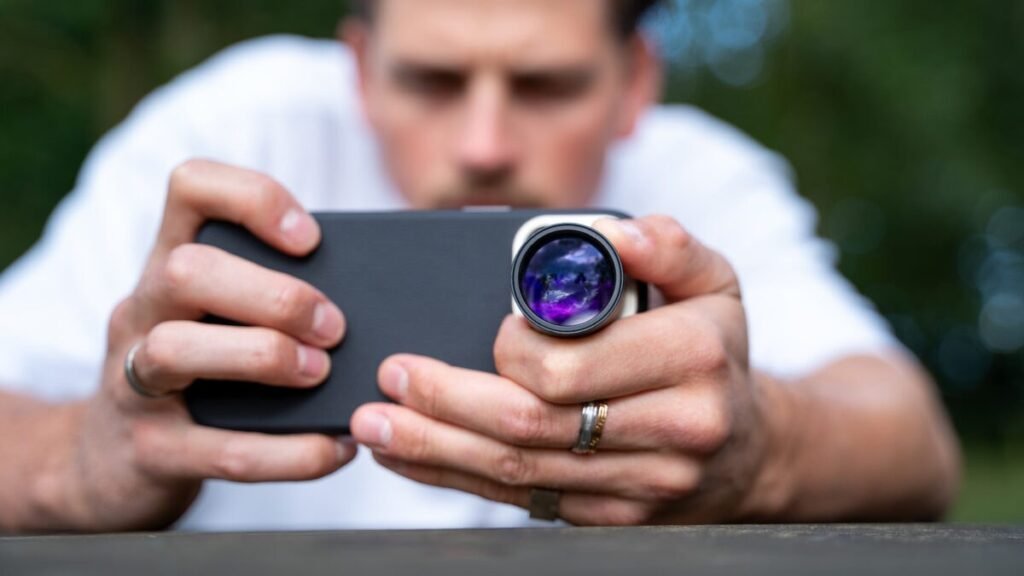
Budget kits, like many APEXEL options, use a clip that grips your phone with the lens centered over the camera. This works on just about any phone, but alignment is manual and can drift. On phones with big camera bumps or wide camera bars (Pixels especially), a clip can sit unevenly and cause focus or vignetting headaches. Clips are fine for casual experimenting — just bring patience.
3. Threaded adapter mounts: the enthusiast route
The ULANZI CL-003 and similar pro-oriented lenses use a 17mm threaded adapter that screws onto a phone cage or adapter plate. You get rock-solid, repeatable alignment plus a proper phone cage that accepts accessories like lights and handles. It’s the best route for serious video work, but you’ll need to buy into the adapter system as well.
4. Which lens type do you actually need?
Ask yourself what your phone can’t do today. If you shoot close-ups of nature, products, or tiny details, buy a macro lens. If you’re constantly pinching to zoom at concerts, sports, or wildlife, buy a telephoto. If you shoot real estate, architecture, or group shots in tight rooms, a wide-angle or fisheye fills the gap. Don’t buy a kit “for everything” — you’ll use one or two lenses and resent the rest.
The Best Phone Lenses of 2026
Best Overall: Moment Lenses
Moment is the best-known name in smartphone photography accessories for a reason: its lenses are made for people who genuinely want to experiment with mobile photography, not just clip on a gimmick. The lineup includes a 58mm Tele Lens for a natural telephoto perspective — lovely for portraits and tighter compositions — and a 14mm Fisheye with an extremely wide field of view for creative shots, tight interiors, and dramatic landscapes.
The real edge of the Moment system is the mounting. Moment makes cases designed specifically to attach its lenses, so alignment is automatic and exact. iPhone support is particularly strong; Android users should confirm case availability for their model, since a universal mount is the fallback where no dedicated case exists.
The main drawback is price. Lenses start around $99 each, and you need the mounting case on top of that. If you’re merely curious about phone-lens photography, that’s a lot to spend before you know whether you’ll enjoy it.
Pros:
- Excellent optical quality — sharp with minimal distortion
- Bayonet case mount gives perfect, repeatable alignment
- Wide lineup: tele, fisheye, wide, macro, and anamorphic options
- Works with Moment’s app and lens-specific camera profiles
Cons:
- Expensive — $99+ per lens plus the cost of the case
- Android case support is limited compared to iPhone
Best for: iPhone photographers who want the sharpest, most reliable phone lens system and shoot often enough to justify the investment.
Best for Macro: ULANZI CL-003
If close-up photography is specifically your thing, the ULANZI CL-003 is the specialist pick. It’s a phone lens attachment for macro photography with 10x optical magnification and a 75mm focal length, plus a focus ring for adjusting working distance — a feature clip-on lenses rarely offer. That focus ring matters more than it sounds: at macro distances, tiny adjustments make or break the shot.
The aluminum build adds weight next to basic plastic phone clips, but for macro that’s a feature, not a bug. A little mass helps keep close-up shots steady when your hands are the tripod. Image quality is a clear step up from generic macro clip-ons, with better edge sharpness and less color fringing.
The catch is compatibility. The CL-003 isn’t a clip-on — it needs a 17mm adapter or phone cage, an extra purchase if you don’t own one already. If you’re pairing it with a dedicated video setup, the cage ecosystem makes even more sense, since you can mount lights and handles alongside it.
Pros:
- True 10x macro with adjustable focus distance
- Solid aluminum build that steadies close-up shots
- Better optical quality than budget clip-on macro lenses
- 17mm thread integrates with phone cages and pro accessories
Cons:
- Requires a 17mm adapter or cage — not a standalone solution
- Macro-only: useless for telephoto or wide shots
Best for: Dedicated macro shooters — nature close-ups, product photography, jewelry, insects — who want real optical magnification.
Best for Serious Telephoto: APEXEL 30X
The APEXEL 30X is the odd one out here, and it exists for exactly one reason: extreme reach. With 30x optical magnification and 300mm-equivalent long-range shooting, this is the lens for moon shots, distant wildlife, stadium moments, and surveillance-style photography no phone can touch natively. Multi-coated glass helps keep chromatic aberration under control at that magnification.
At 30x, physics takes over. Any hand movement gets amplified enormously, so a tripod isn’t optional — it’s essential. Even tapping the shutter on your phone can blur the shot; use a Bluetooth remote or the camera’s timer. A sturdy phone stand or mini tripod is effectively a required accessory for this lens.
Image quality won’t match a real camera with a telephoto lens — atmospheric haze and phone processing set the ceiling — but for capturing distant detail that would otherwise be impossible, nothing else near this price comes close.
Pros:
- 30x optical reach — moon and wildlife shots phones can’t manage
- Multi-coated glass reduces chromatic aberration
- Far cheaper than any camera-and-lens combo with this reach
- Clip mount works across iPhone and Android
Cons:
- Tripod is practically mandatory at this magnification
- Image quality softens at full zoom, especially in haze or low light
Best for: The curious experimenter who wants maximum zoom for birds, the moon, and distant subjects — and owns (or will buy) a tripod.
Phone Lens Comparison Table
| Lens | Type | Mount system | Price range | Strength |
|---|---|---|---|---|
| Moment 58mm Tele / 14mm Fisheye | Telephoto, fisheye (+ others) | Dedicated case | ~$99+ per lens | Best optics, easiest mounting |
| ULANZI CL-003 | Macro (10x) | 17mm adapter / cage | Mid-range | Best dedicated macro quality |
| APEXEL 30X | Telephoto (30x) | Universal clip | Budget-friendly | Extreme zoom reach |
As an Amazon Associate I earn from qualifying purchases.
FAQs About Phone Lenses
Are phone lens attachments really worth it in 2026?
They are if they solve a problem your built-in cameras can’t. Macro and telephoto lenses add genuine optical capability — no phone has a true 30x lens or a dedicated macro optic matching the ULANZI’s 10x. For casual snapshots, your phone’s own cameras are more than enough. Buy a lens for a specific purpose rather than as a general upgrade, and you’ll be happy with it.
Will a clip-on lens work on my Pixel or Galaxy phone?
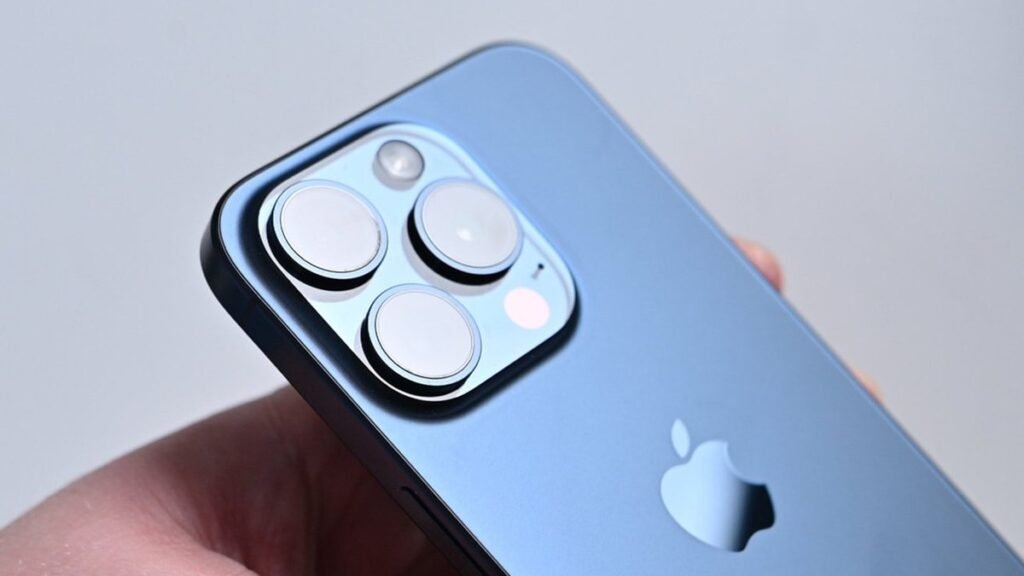
Most universal clip lenses work on both iPhone and Android, but multi-camera phones complicate alignment. Pixels with their big camera bars can be tricky — if the clamp doesn’t sit squarely over the camera system, alignment problems hurt focusing and image quality. A dedicated mounting plate, a compatible case, or a phone cage gives far more reliable results on phones with prominent camera bumps.
Does the Moment lens system work with Android phones?
Moment makes dedicated cases for select Samsung and Google phones, but iPhone support is by far the strongest. If your Android model has a Moment case, the experience matches iPhone. If not, you’re stuck with a universal mounting solution, which somewhat defeats the point of buying into Moment’s precision system — in that case, weigh the ULANZI or APEXEL options first.
Can I use a phone lens for video?
Yes — all of these lenses work for video as well as stills. For macro video, a tripod is essential: even micro-vibrations get amplified at high magnification. The ULANZI CL-003 suits video work particularly well thanks to its manual focus barrel, which allows smooth focus pulls that autofocus can’t replicate.
Final Verdict: Which Phone Lens Should You Buy?
Whatever you choose, remember the golden rule of phone lens attachments: the mount matters as much as the glass. Nail the mounting, shoot in good light, and your phone camera will pull off things it was never designed to do.
Affiliate Disclosure: This article contains affiliate links. If you purchase through them, we may earn a commission at no extra cost to you.
Where to Buy: Check Price on Amazon · Compare Prices on Daraz · Check Daraz Deals · Check AliExpress Price · See AliExpress Deals
Check the price on AliExpress — the global marketplace with millions of tech products.
As an AliExpress affiliate, we may earn a commission on qualifying purchases.







Pingback: Oppo Find X9 Pro Review: Camera Beast, 7500mAh