Meta Quest 3 vs PSVR 2 in 2026: Which VR Headset Wins?
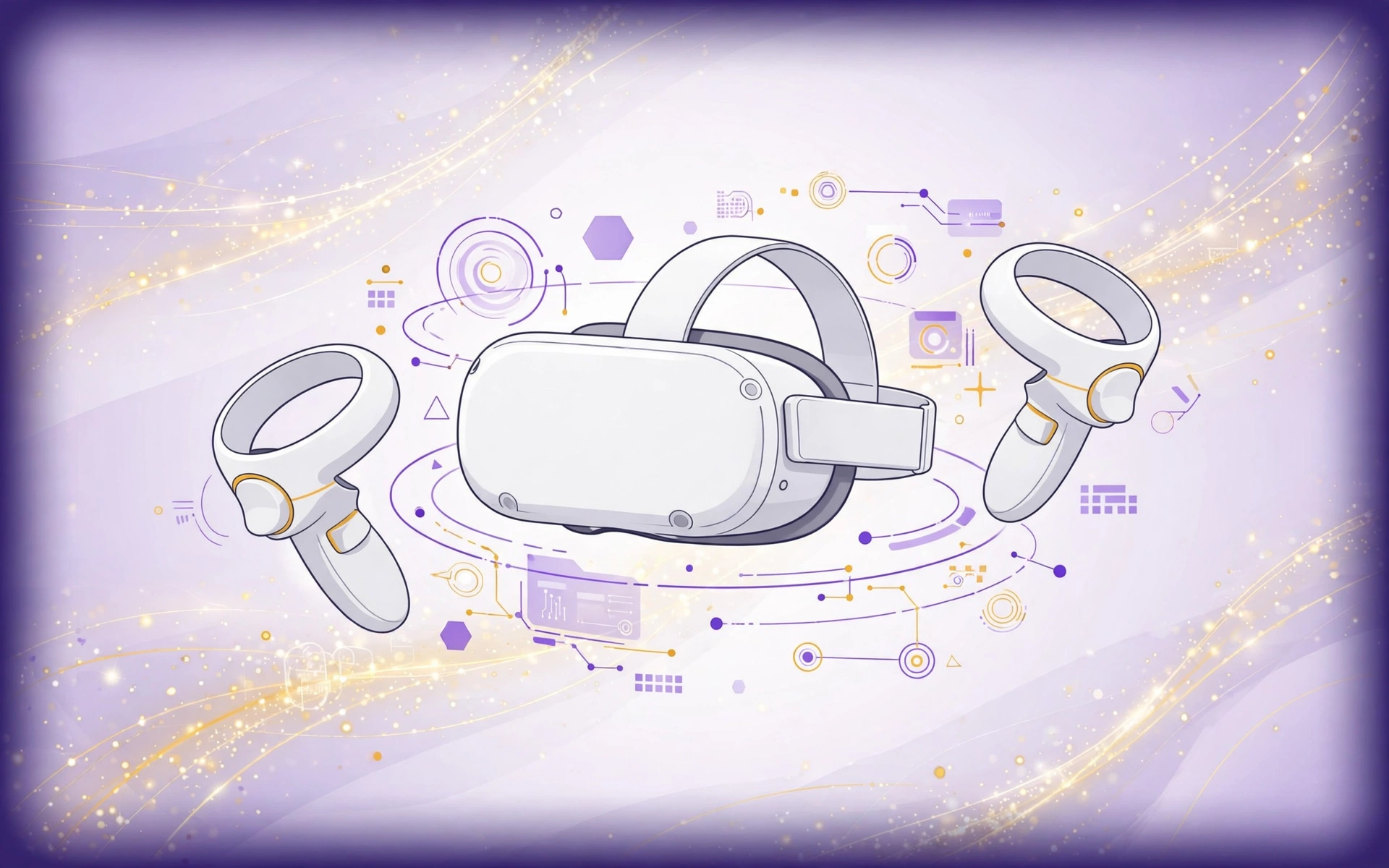
This is the VR question that actually matters in 2026. On one side: the Quest 3, a $499 standalone headset that needs nothing else. On the other: the PSVR 2, a $549 headset that needs a $499 PS5 to function. One is freedom. The other is raw power. I’ve owned both for over a year, and the answer is clearer than the spec sheets suggest.
Heads up: this post contains affiliate links to Amazon, Daraz, and AliExpress — if you buy through them, we may earn a commission at no extra cost to you.
Quick framing before we start: these headsets want different things from you. The Quest 3 wants you to pick it up and play anywhere. The PSVR 2 wants you to sit in front of your PlayStation and be amazed. Both succeed. Only one fits most people’s lives.
Round 1: Graphics and immersion — PSVR 2 wins, but…
No contest on raw specs. The PSVR 2’s OLED display delivers true blacks, HDR, and colors the Quest 3’s LCD simply can’t match. Horror games in a PSVR 2 are genuinely darker — Resident Evil Village in pitch-black OLED is a different, more terrifying game than the Quest version. Eye tracking enables foveated rendering that keeps the image sharp exactly where you’re looking. And the headset haptics — a subtle rumble in the headband during explosions — is a trick the Quest can’t replicate.
The PS5’s GPU does the heavy lifting, so games like Gran Turismo 7 and Horizon Call of the Mountain look closer to flat PS5 games than to anything on a mobile chip. If visual fidelity is your top priority, stop reading. Buy the PSVR 2.
But. That “but” is doing real work. The Quest 3’s pancake lenses are sharper edge-to-edge than the PSVR 2’s Fresnel lenses — the PSVR 2 has a smaller sweet spot and more blur at the periphery, which undercuts some of its display advantage in practice. And developers have gotten scary good at squeezing the XR2 Gen 2 chip: Red Matter 2 and Batman: Arkham Shadow look far better than “mobile graphics” has any right to. The gap is real, but it’s narrower than the spec sheet implies — and it shrinks every year as Quest developers learn new tricks.
Round 2: Freedom and convenience — Quest 3 by a mile
This is where the fight ends for most people. The Quest 3 is wireless, standalone, and room-scale out of the box. I play in my living room, my bedroom, my backyard. Setup took four minutes. The PSVR 2 is tethered to a PS5 with a single (mercifully slim) cable, and you’re anchored to wherever your console lives.
That cable matters more than reviewers admit. In fast games — Pistol Whip, Beat Saber, anything with spinning — you feel it. You manage it. You step over it. After a month of wireless Quest play, going back to the cable feels like going back to wired earbuds. Technologically fine. Experientially annoying.
Then there’s the “pick up and play” factor. My Quest 3 gets used four or five times a week because turning it on takes ten seconds. The PSVR 2 gets used when I’ve planned a session — TV on, console on, headset on, cable managed. Friction kills habits. The Quest has almost none; the PSVR 2 has just enough to matter.
Round 3: Game libraries — Quest 3, and it’s not close anymore
In 2023 this round went to PlayStation. In 2026 it doesn’t. Sony’s first-party VR output slowed to a trickle — Horizon Call of the Mountain remains excellent, Gran Turismo 7 in VR is sublime, and Resident Evil Village is a showcase, but the release calendar has been thin. Third-party support exists but the store feels quiet compared to its launch year.
The Quest store, meanwhile, is an avalanche. Batman: Arkham Shadow, Asgard’s Wrath 2, Assassin’s Creed Nexus — Meta funded genuine AAA-scale exclusives while Sony went quiet. The indie scene is healthier too: Gorilla Tag, Walkabout Mini Golf, Demeo. And the Quest plays the entire back catalog of Quest 2 games, a library five years deep.
One caveat: if you already own a PS5 and a stack of flat PS5 games with VR modes (GT7, RE Village, No Man’s Sky), the PSVR 2’s effective library is bigger for you personally. But for a new buyer starting from zero? Quest 3, easily.
Round 4: Comfort — closer than you’d think
The PSVR 2’s halo-style headband is genuinely comfortable — it distributes weight around your forehead instead of squeezing your face, and the single-cable design keeps things tidy. Out of the box, it’s more comfortable than the Quest 3’s stock strap. No argument.
But the Quest 3 with a $40–70 aftermarket strap beats it. A good halo or battery strap fixes the Quest’s front-heaviness completely, and then you’re comparing a comfortable wireless headset against a comfortable wired one. The PSVR 2 wins the out-of-box round; the Quest wins the “I’ll spend an extra fifty bucks” round. Budget-strap hunters should check AliExpress — the third-party strap scene there is deep and cheap.
Round 5: Total cost — do the real math
This is the round that ends debates at dinner parties. Let’s add it up:
- Quest 3: $499 for the 512GB model. Done. That’s the whole system.
- PSVR 2: $549 for the headset + $499 for a PS5 (if you don’t own one) = $1,048. More than double.
If you already own a PS5, the math flips: $549 for the PSVR 2 versus $499 for the Quest 3 is basically a tie, and then it comes down to the other rounds. But if you’re buying from scratch, the PSVR 2 costs twice as much for a headset you’ll use less often because of the cable. That’s a brutal value proposition.
Don’t forget the hidden costs on both sides: the Quest wants a better strap ($50ish) and maybe a battery pack; the PSVR 2’s Sense controllers need charging via a dock or USB, and prescription lens inserts cost extra for both. For Pakistani buyers, it’s worth checking Daraz during sale events — imported headsets sometimes land cheaper than US retail: compare headset prices on Daraz.
Round 6: The intangibles
A few things that don’t fit in a spec table. The Quest 3 does mixed reality — full-color passthrough, spatial apps, the whole “laptop in VR” thing. The PSVR 2’s passthrough is black-and-white and purely functional; Sony clearly doesn’t care about MR. If you want to use VR for anything beyond games, the Quest is the only choice.
Hand tracking: the Quest’s is excellent now — genuinely usable for navigation and casual games. The PSVR 2 barely bothers; it’s a controller-first system. Eye tracking goes the other way — the PSVR 2 has it, the Quest 3 doesn’t — and it’s great for foveated rendering and social VR eye contact, but few games use it meaningfully yet.
Social and multiplayer: the Quest wins by default because more people own one. Finding a Walkabout Mini Golf group at 10pm is trivial on Quest. On PSVR 2, multiplayer lobbies can feel empty. Network effects are real.
The PC VR wildcard
One more angle most comparisons skip: PC VR. The Quest 3 streams PC VR games wirelessly via Air Link or Virtual Desktop, and in 2026 the experience is excellent — I play Half-Life: Alyx on a mid-range gaming laptop with barely noticeable latency on a WiFi 6 network. The full SteamVR library opens up: Alyx, Boneworks, the modding scene.
The PSVR 2 got an official PC adapter, which sounds equivalent until you use it: it’s wired, it loses HDR, eye tracking, and headset haptics on PC, and the setup is fiddly. The Quest is simply the better PC VR headset despite not being built for it. If you own a gaming PC, this round isn’t close — and it makes the Quest’s value proposition even more lopsided.
So who should buy which?
Buy the Quest 3 if: you’re new to VR; you value wireless freedom; you want the biggest game library; you don’t own a PS5; you care about mixed reality; you want the headset you’ll actually use weekly. That’s most people.
Buy the PSVR 2 if: you already own a PS5 and live for graphical fidelity; you’re a sim racer (GT7 in VR is transcendent); you’re a horror devotee who wants true-black OLED; or you’re a PlayStation loyalist with the ecosystem investment to justify it. For that specific buyer, it’s fantastic — just know you’re buying into a quieter platform.
Verdict: Quest 3 wins for almost everyone
Tallying the rounds: PSVR 2 takes graphics, Quest 3 takes freedom, library, cost, multiplayer, and mixed reality. That’s not close. The PSVR 2 is the better display attached to the worse product — tethered, pricier as a system, and living on a platform Sony has visibly deprioritized.
The Quest 3 is the headset I’d recommend to a friend, the one I reach for myself, and the only one of the two I’d bet on still getting major releases in 2027. Buy it, get a better strap, and don’t look back.
Winner: Meta Quest 3.
Where to Buy: Compare Prices on Daraz · Check AliExpress Price
Check the price on AliExpress — the global marketplace with millions of tech products.
As an AliExpress affiliate, we may earn a commission on qualifying purchases.