Best Smartwatches for Running in 2026: 5 Picks with Accurate GPS
A bad GPS watch will ruin a good run. Ask us how we know. It’ll tell you your 5K was 4.7K, insist your pace was 8:30 when you were clearly holding 8:00, and draw a route map with you running straight through three buildings. The best smartwatches for running fix all of that — satellite tracking you can actually trust, a heart-rate sensor that keeps up mid-stride, and a battery that doesn’t give up at mile 18. We combed through the crowded 2026 lineup and landed on five watches worth your money: picks for serious marathoners, iPhone loyalists, Android users, and two that prove you don’t need flagship cash for flagship tracking.
Disclosure: This article contains affiliate links. As an Amazon Associate, we earn from qualifying purchases. We may also earn commissions from Daraz and AliExpress purchases made through links on this page, at no extra cost to you.
What Separates a Running Watch from a Regular Smartwatch
Every smartwatch counts steps. A running watch earns the title with three things: satellite accuracy, heart-rate data you can believe, and software that actually understands training. GPS is the big one. Basic watches use a single GPS frequency, and it drifts — in cities, under tree cover, exactly where most of us run. The serious running watches of 2026 use dual-band (multi-frequency) GPS: two satellite signals at once, holding your position far more reliably. If your training lives or dies on accurate pace and distance, this is the spec that matters most.
Heart-rate accuracy matters just as much. Wrist-based optical sensors have come a long way, but the cheap ones still lag on intervals — flashing your heart rate seconds after the effort already happened. The best running watches sample more often and cope better with sweat and arm swing, so your zone training is built on real numbers instead of guesswork.
Then there’s the software layer: training load, recovery suggestions, VO2 max estimates, structured workouts beamed to your wrist. Garmin and Coros made their names here, and they still think about training the way general-purpose smartwatches don’t.
How to Choose a Running Smartwatch
1. GPS accuracy and satellite support
Dual-band (multi-frequency) GPS is the thing to look for. On a 2026 flagship it’s standard; on budget watches it’s usually the first feature cut. Running open suburban routes? Single-band will do fine. Downtown, trails, dense tree cover — that’s where dual-band earns its keep. Also glance at satellite support: GPS plus GLONASS and Galileo is the normal baseline now.
2. Battery life in GPS mode
Manufacturers love quoting “up to 14 days” of battery — then that number falls off a cliff the moment GPS switches on. A watch that lasts two weeks on the wrist might manage 20 hours of GPS tracking. Or six. If you’re training for a marathon or beyond, look specifically at the GPS-mode rating and give yourself a safety margin. And yes, streaming music off the watch eats that number further.
3. Running metrics and training features
How deep do you want to go? Casual runners are well served by pace, distance, heart-rate zones, and auto-lap. If you’re more committed, look for cadence, training status, recovery time, and race predictions — genuinely useful stuff once you start trusting it.
4. Comfort, weight, and ecosystem fit
A running watch you won’t wear is just a paperweight. Dedicated running watches run lighter than chunky adventure models — under 50 grams is the sweet spot. And be honest about your phone: iPhone users get the most out of an Apple Watch, while Android runners should be looking at Samsung, Garmin, or Coros.
Still torn between ecosystems? Our Apple Watch Series 12 review and Garmin Fenix 8 Pro deep dive cover both ends of the spectrum.
The 5 Best Smartwatches for Running in 2026
1. Garmin Forerunner 265 — Best for most runners
The Forerunner 265 is the default recommendation for a reason — it nails the fundamentals without asking for ultramarathon money. The AMOLED display stays readable in harsh sun, dual-band GPS keeps pace and distance honest, and Garmin’s training suite (morning report, training readiness, suggested workouts) remains the best coaching system you can strap to a wrist. Battery stretches to about 13 days normally, roughly 20 hours with GPS on — enough for any marathon. Around $449 isn’t cheap. But it’s the watch most runners should buy first.
Pros:
- Excellent dual-band GPS accuracy
- Best-in-class training and recovery insights
- Bright AMOLED screen that’s easy to read mid-run
- Strong GPS battery life for the price
Cons:
- Smartwatch features lag behind Apple and Samsung
- No cellular option
Best for: Runners who want the best training data without paying flagship prices.
2. Coros Pace 3 — Best value running watch
The Pace 3 is the watch that embarrasses everything near its price. Around $229 gets you dual-frequency GPS, a featherweight build you’ll forget you’re wearing, and battery life that borders on absurd — roughly 38 hours of GPS tracking, which is ultramarathon territory at a midrange price. Coros’s training software isn’t as deep as Garmin’s, but the fundamentals are all here: workouts, training load, recovery, race predictions. The memory-in-pixel display won’t wow you next to AMOLED, but it stays readable in sunlight and barely sips power.
Pros:
- Outstanding GPS battery life for the price
- Very light and comfortable for long runs
- Dual-frequency GPS accuracy rivals pricier watches
Cons:
- Non-AMOLED display looks dated next to rivals
- Smaller app and accessory ecosystem than Garmin
Best for: Budget-conscious runners who refuse to compromise on GPS and battery.
3. Apple Watch Series 12 — Best for iPhone runners
Run with an iPhone? The Series 12 is the most frictionless running watch you can buy. Pairing is instant, Apple Health ties it all together, and watchOS has grown into a genuinely capable running platform — custom workouts, heart-rate zones, race routes, all on your wrist. GPS is solid for road running. The catch, as ever, is battery: about a day of normal use, and long runs chew through it fast. At around $399, it’s the pick for runners who want one watch that does everything.
Pros:
- Seamless iPhone integration and best-in-class smart features
- Strong running workout and health tracking software
- Bright, crisp always-on display
Cons:
- Battery life can’t match Garmin or Coros on long runs
- iPhone required — no good for Android users
Best for: iPhone users who want one watch for running and everything else.
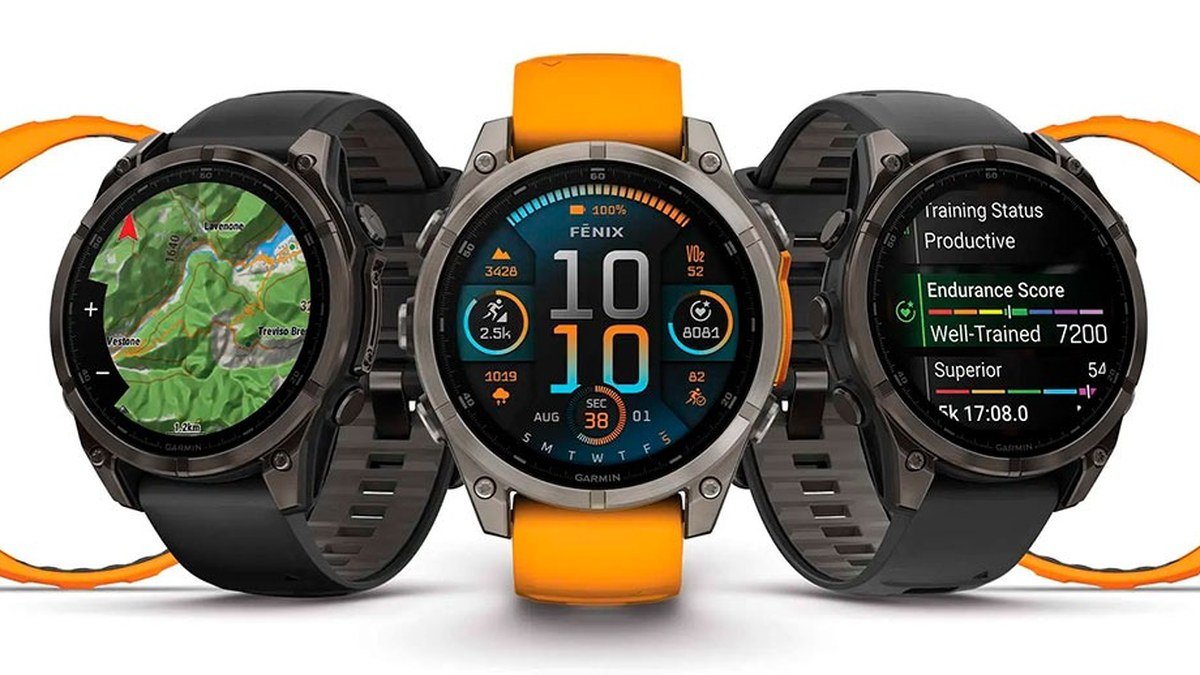
4. Garmin Fenix 8 Pro — Best for ultrarunners and trail adventures
The Fenix 8 Pro is overkill for most runners. That’s the whole point. This is the watch for ultramarathons and multi-day adventures — GPS battery measured in days, full topo maps on your wrist, a build that shrugs off rocks and rain, and every training metric Garmin makes. It costs well over $1,000, it’s heavy next to a Forerunner, and you’ll never touch half its features. But if your races are measured in hours, not minutes, nothing else comes close.
Pros:
- Enormous GPS battery life for ultras and expeditions
- Full maps and navigation built in
- Extremely durable, adventure-ready build
Cons:
- Very expensive
- Heavy and bulky for daily wear
Best for: Ultrarunners, trail runners, and anyone whose runs last all day.
5. Samsung Galaxy Watch 8 — Best Android all-rounder
Android users who want a proper smartwatch that also runs well: start here. The Galaxy Watch 8 pairs dual-band GPS with Samsung’s running coach, energy score, and solid heart-rate tracking, wrapped in the polished Wear OS experience — Google Maps, Wallet, third-party apps, the lot. It’s not as training-deep as a Garmin, and GPS battery lasts a day or two rather than a week. But for 5K-to-half-marathon runners who also want notifications, music, and payments on the wrist, it’s the complete package at around $349.
Pros:
- Great all-round smartwatch with capable running features
- Dual-band GPS and useful running coach
- Full Wear OS app ecosystem
Cons:
- GPS battery life trails Garmin and Coros badly
- Training insights aren’t as deep as dedicated running brands
Best for: Android users who want a smartwatch first and a running watch second.
Browse running watches on Daraz
Best Running Smartwatches: Quick Comparison
| Watch | Best for | Standout feature | Price |
|---|---|---|---|
| Garmin Forerunner 265 | Most runners | Dual-band GPS, training readiness | around $449 |
| Coros Pace 3 | Value | ~38 hrs GPS battery at $229 | around $229 |
| Apple Watch Series 12 | iPhone users | Best smartwatch experience | around $399 |
| Garmin Fenix 8 Pro | Ultrarunners | Multi-day GPS, full maps | over $1,000 |
| Samsung Galaxy Watch 8 | Android users | Wear OS + dual-band GPS | around $349 |
Frequently Asked Questions
Do I need a Garmin to take running seriously?
No — but a Garmin makes it easier. The Forerunner 265’s training readiness scores, suggested workouts, and race predictions genuinely help you train smarter. That said, an Apple Watch or Galaxy Watch paired with a solid plan from a coaching app gets a committed runner 90% of the way there. Buy the Garmin for the coaching intelligence, not because other watches “can’t” track runs.
Is dual-band GPS worth paying extra for?
If you run in cities, under heavy tree cover, or in the mountains — yes, you’ll notice. Dual-band GPS holds your position where single-band drifts, which means pace you can trust when it counts: intervals, race day. If every run is on open suburban roads, a cheaper single-band watch will do the job.
Can an Apple Watch replace a Garmin for marathon training?
For most marathoners, yes. The Series 12 handles custom workouts, heart-rate zones, and long-run tracking well, and plays nicely with Strava and coaching apps. Its weak spots: battery on heavy training weekends, and recovery analytics that don’t go as deep.
How accurate are wrist heart-rate sensors for running?
Good enough for zone training on steady runs; shakier on short intervals. The optical sensors in these watches sample often and handle sweat well, but there’s still a few seconds of lag when effort spikes suddenly. If you live and die by heart-rate zones during intervals, pair any of these with a chest strap.
Should I stream music from my watch while running?
It’s convenient — phone-free runs are genuinely liberating — but it drains the battery fast, sometimes nearly halving GPS tracking time. For short runs, non-issue. For long ones, download playlists ahead of time or pick a watch with battery to spare. Pair it with earbuds that actually stay in while you run.
Final Verdict
The Garmin Forerunner 265 is the running watch most people should buy in 2026 — accurate GPS, the smartest training software, and a price well under the flagships. On a tight budget, the Coros Pace 3 is almost unfair value at around $229. iPhone runners: get the Apple Watch Series 12. Android users: the Galaxy Watch 8. Ultrarunners: the Fenix 8 Pro, no contest. See running watch deals on AliExpress
Where to Buy: Compare Prices on Daraz · Check AliExpress Price
Check the price on AliExpress — the global marketplace with millions of tech products.
As an AliExpress affiliate, we may earn a commission on qualifying purchases.