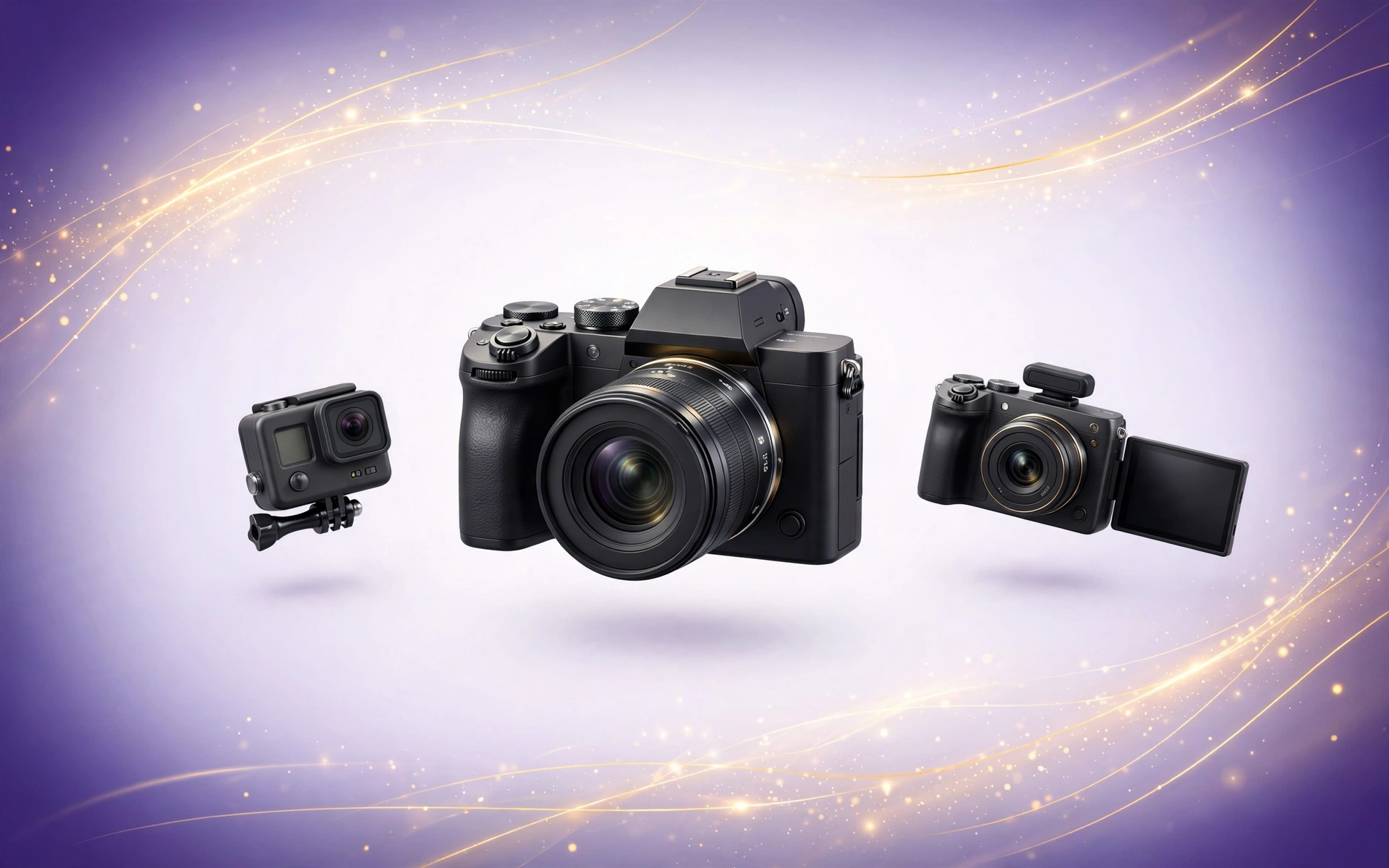
Best Budget Mirrorless Cameras Under $1,000 in 2026
A thousand dollars used to buy you a compromise. In 2026, it buys you a genuinely excellent camera. The sensors, autofocus, and video specs that were flagship-only three years ago have all trickled down, and the budget mirrorless market is the most competitive it’s ever been. The catch? Every camera under $1,000 cuts something. The trick is picking the one whose cuts don’t matter to you.
Heads up: this post contains affiliate links to Amazon, Daraz, and AliExpress — if you buy through them, we may earn a commission at no extra cost to you.
Check Price on Amazon — Canon EOS R50
What $1,000 gets you in 2026 (and what it doesn’t)
Let’s set expectations honestly. Under $1,000, you’re getting an APS-C sensor (not full-frame), a kit lens that’s decent but not dazzling, and a body that makes calculated compromises: one card slot, no in-body stabilization on most models, smaller batteries, simpler weather sealing. What you’re NOT compromising on anymore: autofocus (eye detection is standard), 4K video (standard), and image quality in good light (indistinguishable from cameras costing twice as much for most uses).
The real question for each camera below: what did they cut, and will you notice? Let’s go.
1. Canon EOS R50 — the best all-rounder for most beginners
If you want one recommendation and no homework, buy the R50. Canon’s 24.2MP APS-C sensor, DIGIC X processor, and Dual Pixel CMOS AF II deliver autofocus that embarrasses cameras costing twice as much — it finds eyes instantly and doesn’t let go. Video is oversampled 4K30 from 6K, which looks genuinely crisp, and the vari-angle touchscreen flips around for vlogging.
What you give up: no in-body image stabilization (the kit lens has it, the body doesn’t), a small LP-E17 battery that manages roughly 300 shots per charge, and a single card slot. The RF-S lens lineup is still growing — fine for starters, thinner than Sony’s if you get ambitious later. None of these are dealbreakers for a first camera.
Best for: beginners who want the easiest path to great photos and video. The menus make sense, the auto modes are smart, and the camera grows with you into manual shooting. Usually around $700 with the 18-45mm kit lens — the value king of this list.
2. Sony ZV-E10 — the vlogger’s default
The ZV-E10 isn’t really a photography camera that happens to shoot video. It’s a video camera that happens to take photos. No electronic viewfinder at all — you compose on the rear screen, always. For vlogging, that’s fine. For photography purists, it’s a non-starter. Know which one you are.
What it does brilliantly: 4K video oversampled from 6K, Sony’s excellent autofocus with real-time eye tracking, a fully articulating screen, and video-first features like Product Showcase mode (tap to shift focus from your face to an object you’re holding — every YouTuber’s favorite trick) and Background Defocus (one-tap bokeh). The three-capsule directional mic is the best built-in audio on any camera here, and there’s a mic input plus a headphone jack when you outgrow it.
What you give up: no EVF, no in-body stabilization (rely on stabilized lenses or a gimbal), and the photo experience feels like an afterthought — because it is. The 24.2MP APS-C sensor takes perfectly good stills, but shooting without a viewfinder in bright sunlight is an exercise in squinting.
Best for: YouTubers, streamers, and content creators who shoot 80%+ video. Pair it with the E-mount lens ecosystem — the deepest affordable lens selection in existence — and it’s a content machine. Usually under $700 with the 16-50mm lens, and it drops lower on sale.
3. Nikon Z30 — the cheapest way into a great system
The Z30 is Nikon’s answer to the ZV-E10: a video-first APS-C camera with no viewfinder, built for creators. The 20.9MP sensor is a generation older than Sony and Canon’s 24MP chips, and you’ll notice it slightly in heavy crops — but for video and social media, it’s a non-issue. 4K30 looks clean, 1080p goes to 120fps for slow motion, and it can stream directly over USB-C as a webcam, which is a genuinely useful trick for the work-from-home era.
What you give up: no EVF (same vlogging trade-off as the Sony), the smallest native DX lens lineup of the three (though the FTZ adapter opens up decades of F-mount glass, and third-party Z lenses are arriving), and a 20.9MP sensor that shows its age if you crop aggressively. The fully articulating screen is great; the single card slot and modest battery are standard for the class.
Best for: budget creators who want Nikon’s color and ergonomics, or anyone planning to grow into the Z system — the Z30 is a cheap ticket into lenses you’ll keep for a decade. Often the cheapest body on this list, regularly under $600 with the 16-50mm lens. If you’re shopping from Pakistan, check Daraz — Z30 kits there are frequently the lowest-priced mirrorless option available locally.
4. Fujifilm X-T30 II — the photographer’s camera
Every camera above leans video. The X-T30 II leans photography — hard. Fujifilm’s film simulations (Provia, Velvia, Classic Chrome, and the beloved Acros for black and white) produce JPEGs so good that many owners never shoot RAW. The dial-driven controls — physical dials for shutter speed, exposure compensation, and film simulation — make shooting feel deliberate and joyful in a way menu-driven cameras don’t.
The 26.1MP X-Trans sensor is a gem: sharp, with gorgeous color, and 4K30 video that’s perfectly respectable even if it’s not the camera’s reason for existing. The X-mount lens lineup is the best APS-C-native selection in the industry — compact, high-quality primes at sane prices.
What you give up: autofocus that’s good but a step behind Canon and Sony for tracking moving subjects, video features that lag the video-first bodies (no 4K60, basic video AF), and a smaller grip that feels cramped with bigger lenses. Battery life is modest — carry a spare.
Best for: stills photographers who love the process of shooting. Street, travel, portrait, documentary — if your output is photos and you want them to look beautiful with zero editing, nothing under $1,000 touches this. Usually around $900 body-only; hunt for kit deals.
5. Olympus OM-D E-M10 Mark IV — the tiny one
The smallest, lightest interchangeable-lens camera worth buying. The Micro Four Thirds sensor is half the size of APS-C, which sounds like a dealbreaker until you hold the thing: body plus two lenses fits in a jacket pocket, and the whole kit weighs less than a full-frame body alone. For travel, hiking, and everyday carry, size is a feature — the best camera is the one you actually bring.
What it does well: in-body image stabilization (5-axis, genuinely excellent — the only camera here with IBIS under $700), a bright flip-down touchscreen, and 4K30 video. The MFT lens ecosystem is mature and cheap on the used market. Image quality in good light is excellent; the sensor’s age shows in low light and heavy crops.
What you give up: the smaller sensor means about a stop less low-light performance than APS-C, less background blur at equivalent apertures, and 20MP that feels modest in 2026. Olympus (now OM System) has a smaller market presence, which affects resale and rental availability.
Best for: travelers and hikers who prioritize size above all else. If your current camera stays home because it’s too big, this solves the actual problem. Often under $600 with the 14-42mm kit lens — absurd value for a stabilized body.
6. Canon EOS R100 — the “just get me started” camera
The cheapest interchangeable-lens camera from a major brand, full stop. The R100 takes the R50’s formula and trims it: same 24.2MP APS-C sensor and DIGIC X processor, but a fixed (non-touch, non-articulating) rear screen, noisier 4K with a crop, and simplified controls. It’s basic. Deliberately, unapologetically basic.
Here’s the thing: the sensor and processor are the same as the R50’s, which means image quality is nearly identical. You’re giving up handling and video flexibility, not photo quality. For someone upgrading from a phone who just wants better photos of their kids, their travels, their life — the R100 delivers 90% of the R50’s stills for hundreds less.
What you give up: the fixed screen is the big one (no selfies, no low-angle touch focus), 4K video has a heavy crop that makes wide shots difficult, and the simplified controls will frustrate you once you outgrow auto mode. This is a starter camera with an expiration date — plan to upgrade the body in two years, keep the lenses.
Best for: absolute beginners on the tightest budget, or as a second body. Regularly under $500 with the kit lens. For spare batteries, memory cards, and camera bags at this price level, AliExpress is worth a browse — the accessories markup on budget kits is where retailers make their margin, and you don’t have to pay it.
What you give up vs flagships: the honest summary
Across all six, the pattern is consistent. You lose: full-frame sensors (about a stop of low-light performance and shallower depth of field), in-body stabilization on most models, dual card slots (irrelevant unless you’re shooting weddings), weather sealing (don’t shoot in downpours), and battery life (carry a spare; they’re cheap). You keep: modern autofocus, 4K video, and image quality that’s genuinely excellent for prints, social media, and everything short of professional commercial work.
The dirty secret of the camera industry: a $700 camera with a $500 lens takes better photos than a $2,000 camera with a $150 lens. Budget for glass. The kit lens gets you started; a 50mm f/1.8 equivalent (around $200 for every mount here) transforms what the camera can do in low light and for portraits. That’s the upgrade that matters — not the next body up.
Verdict: our picks by person
Most people: Canon EOS R50. Easiest to learn, best autofocus in the class, strong video, sane price. It’s the default for a reason.
Video creators: Sony ZV-E10. Purpose-built for the job, unbeatable lens ecosystem to grow into.
Tightest budget: Nikon Z30 or Canon R100, depending on whether video or stills matter more. Both are real cameras at unreal prices.
Photography lovers: Fujifilm X-T30 II. The JPEGs, the dials, the joy. You’ll actually want to pick it up.
Travelers: Olympus E-M10 Mark IV. Small enough to always bring, stabilized, cheap.
Whichever you choose, remember: the camera is the cheapest part of photography. Lenses, a spare battery, a decent bag, and actually going out to shoot — that’s where the money and the magic go.
Check Price on Amazon — Sony ZV-E10 (vlogging kit)
Where to Buy: Compare Prices on Daraz · Check AliExpress Price
Check the price on AliExpress — the global marketplace with millions of tech products.
As an AliExpress affiliate, we may earn a commission on qualifying purchases.