Best VR Fitness Accessories in 2026: Turn Workouts Into Games
I canceled my gym membership eight months ago. Not as an experiment — I just stopped going, because thirty minutes of Beat Saber and Pistol Whip at 7am was getting me fitter than the forty-minute drive to the gym ever did. My resting heart rate dropped nine beats. My shoulders have actual definition for the first time since college.
Heads up: this post contains affiliate links to Amazon, Daraz, and AliExpress — if you buy through them, we may earn a commission at no extra cost to you.
But here’s the thing nobody tells you: VR fitness has a gear problem. The stock headset is not built for sweat. The controllers fly out of wet hands. You lose track of where you are and kick the coffee table. This is the setup I built over months of trial, error, and one broken lamp — everything you need to work out in VR safely and seriously.
Start here: the non-negotiable three
If you buy nothing else, buy these three things. They solve the three problems that end VR fitness routines: sweat damage, flying controllers, and lost spatial awareness.
1. Sweat-proof facial interface cover
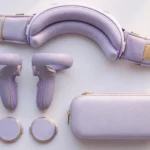
The stock foam facial interface absorbs sweat like a kitchen sponge. After a month of workouts it smells, it stains, and it’s pressing bacteria into your face. A silicone or PU leather cover wipes clean in ten seconds. This is hygiene, not luxury.
I use a two-pack of silicone covers and rotate them — one on the headset, one drying. Total cost was under $15. The difference is night and day: no more post-workout breakouts on my forehead, no more damp foam against my skin. If you do one thing from this article, do this one.
2. Controller grip covers with knuckle straps
Sweaty hands plus smooth plastic controllers equals a $500 accident. Grip covers add texture and — critically — knuckle straps that keep the controllers attached to your hands even when you fully open your grip. In games like Beat Saber and Pistol Whip, where you’re whipping your arms at full speed, this is the difference between confidence and caution.
The AMVR upgraded grips are my pick: silicone body, adjustable knuckle straps, and a battery door cutout so you’re not peeling them off every time the AAs die. They add slight bulk, which actually improves the feel — the bare Touch Plus controllers are a touch slim for big hands. One caution: the added grip changes your throw timing in games for the first session or two. You’ll adjust.
3. A VR exercise mat
You need a physical anchor. When you’re blindfolded by a headset, drifting across the room is inevitable — I once ended up two meters from where I started, mid-song, with no idea. A circular or hexagonal mat with a textured center gives your feet a reference point: feel the edge, recenter, keep playing.
Get one at least 35 inches across with a non-slip base. The center marker matters more than the branding — some mats have a raised nub, some a different texture zone. Either works. This is also the cheapest injury prevention you’ll ever buy: knowing where your play space ends without lifting the headset.
Level up: weighted grips and resistance
Once the basics are handled, the question becomes intensity. VR is great cardio out of the box, but building strength needs added resistance.
Weighted controller grips
These replace your standard grips with versions carrying 100–300g of added weight per hand. It doesn’t sound like much. After twenty minutes of Beat Saber with 200g per hand, your shoulders will disagree. Start light — 100g — and work up. Jumping straight to heavy weights with high-speed arm movements is how you strain a rotator cuff.
I’ll be honest about the trade-off: added weight slightly reduces tracking precision in games that need fine aim, and it increases controller momentum — which is exactly why the knuckle straps from section one are mandatory, not optional. I use weighted grips for fitness apps and rhythm games, and swap to standard grips for shooters.
VR-compatible resistance bands
Ankle and wrist bands designed for VR keep a low profile so they don’t interfere with tracking. They’re genuinely useful for leg days — squats, lunges, and side-steps in games like OhShape or FitXR get meaningfully harder with band resistance. The key spec is “tracking-safe”: cheap bands with big metal buckles can confuse the headset’s cameras. Stick to VR-specific designs.
Heart-rate tracking: train with data
This is what turned my VR sessions from “fun exercise” into actual training. A Bluetooth heart-rate armband (chest straps work too, but armbands survive jumping better) pairs with your phone, and suddenly you know you’re in zone 3, not guessing.
My typical numbers, for reference: Beat Saber on Expert burns me at 130–150bpm — solid zone 3 cardio. Pistol Whip pushes 150–165. Les Mills Bodycombat spikes to 170+. A thirty-minute mixed session lands around 300–400 calories, comparable to a moderate run. Without the heart-rate data I’d have sworn Beat Saber was “light” exercise. The numbers said otherwise.
Any Bluetooth HR monitor works — you don’t need a VR-specific one. The VR-specific part is just remembering to wear it. I keep mine next to the headset so grabbing both becomes one habit.
The environment: fans, flooring, and light
A few unglamorous upgrades that matter more than any gadget:
- A fan pointed at you. The single best VR fitness accessory is a $20 box fan. Airflow keeps the lenses from fogging, keeps you cool, and gives you a directional reference — you always know which way you’re facing. I won’t work out without one now.
- Flooring. Hard floors plus jumping equals sore knees and angry downstairs neighbors. Interlocking foam tiles under your mat fix both. They’re cheap, they store flat, and they make burpees-in-VR survivable.
- Lighting. The Quest’s tracking needs decent light. A dim room causes tracking glitches mid-workout — the worst time for your controllers to drift. Keep the room well lit; your headset will thank you.
A real weekly routine (steal mine)
Gear without a plan gathers dust. Here’s the five-day split I actually follow:
- Monday: Beat Saber, 30 min, weighted grips on. Cardio + shoulders.
- Tuesday: Les Mills Bodycombat, 25 min. Full-body HIIT. This one hurts (good).
- Wednesday: Rest or Walkabout Mini Golf with friends. Active recovery counts.
- Thursday: Pistol Whip, 30 min. Cardio disguised as an action movie.
- Friday: FitXR boxing, 25 min, resistance bands on legs. The finisher.
Weekends off. Total: about two hours a week, zero commute, and I actually look forward to it — which is the whole point. The best workout is the one you’ll do, and VR’s superpower is making “the one you’ll do” feel like play. Six months in, I don’t miss the gym at all.
The hygiene routine (don’t skip this)
Sweat and shared headsets are a bacterial playground. My post-workout routine takes ninety seconds: wipe the silicone cover and controllers with an alcohol-free lens wipe, hang the facial cover to air-dry instead of sealing it in the case, and once a week the covers get a proper wash with mild soap and water. Alcohol wipes go nowhere near the lenses — ever. They strip the coatings.
If multiple people use the headset, add disposable hygiene masks — thin non-woven covers that sit between face and interface. They look silly. They prevent the “who used this last” conversation entirely. A hundred-pack costs less than a pizza and lasts months. Shared-headset households: this is non-negotiable.
What to skip
Not everything marketed as “VR fitness” is worth money. VR weight vests sound hardcore but throw off your balance in games with jumping — and the good ones cost more than a gym month. “VR fitness gloves” are a solution in search of a problem now that knuckle-strap grips exist. And any accessory that blocks the controller’s tracking ring area (older designs) will cause drift — check compatibility with Touch Plus controllers specifically.
For budget hunters: most of the basics — silicone covers, grip covers, mats — have perfectly good generic versions on AliExpress for a fraction of the brand-name price. The tech is simple; you’re paying for branding. Save the real money for the heart-rate monitor, where sensor quality actually matters.
Verdict: the starter kit
If you’re starting VR fitness this month, here’s the minimum viable setup in order of impact: silicone facial cover ($15), knuckle-strap grip covers ($25), exercise mat ($30), a fan you probably own. Under $75 total, and it transforms VR from “fun demo” into “legitimate training tool.”
Add weighted grips and a heart-rate monitor when the habit sticks — usually around week three, when you catch yourself thinking “I wonder what my heart rate hit during that song.” That’s when you know it’s working.
Shopping from Pakistan? Daraz stocks the major VR accessory brands through local importers — worth comparing before ordering internationally: browse VR accessories on Daraz.
Where to Buy: Compare Prices on Daraz · Check AliExpress Price
Check the price on AliExpress — the global marketplace with millions of tech products.
As an AliExpress affiliate, we may earn a commission on qualifying purchases.